Hey there! As a ball valve supplier, I often get asked if ball valves can be used for food and beverage applications. Well, the short answer is yes, but there’s a lot more to it than that. Let’s dive into the details. Ball Valve
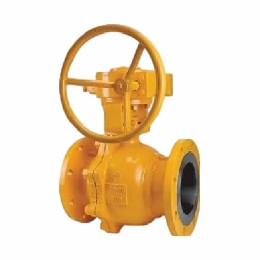
First off, what exactly is a ball valve? A ball valve is a type of valve that uses a spherical disc to control the flow of fluid. The ball has a hole in the middle, and when the valve is open, the hole aligns with the pipe, allowing the fluid to pass through. When the valve is closed, the ball rotates so that the hole is perpendicular to the pipe, blocking the flow.
Now, when it comes to food and beverage applications, there are some specific requirements that ball valves need to meet. One of the most important factors is the material of the valve. The valve needs to be made of materials that are safe for contact with food and beverages. This means using materials that are non-toxic, corrosion-resistant, and easy to clean.
Stainless steel is a popular choice for ball valves in food and beverage applications. It’s durable, corrosion-resistant, and easy to clean, making it a great option for handling food and beverage products. Other materials that can be used include plastic and brass, but stainless steel is often the preferred choice due to its superior properties.
Another important consideration is the design of the ball valve. The valve needs to be designed in a way that minimizes the risk of contamination. This means having smooth surfaces that are easy to clean and free of crevices where bacteria and other contaminants can accumulate. Additionally, the valve should be designed to prevent the buildup of food particles and other debris.
In addition to the material and design, the ball valve also needs to meet certain industry standards and regulations. For example, in the United States, ball valves used in food and beverage applications need to comply with the standards set by the Food and Drug Administration (FDA). These standards ensure that the valve is safe for use with food and beverages and that it meets certain quality and performance requirements.
So, why are ball valves a good choice for food and beverage applications? Well, there are several reasons. First, ball valves offer excellent flow control. They can be opened and closed quickly and easily, allowing for precise control of the flow of food and beverage products. This is important in applications where accurate dosing and dispensing are required.
Second, ball valves are highly reliable. They have a simple design with few moving parts, which means they are less likely to break down or malfunction. This is important in food and beverage applications where downtime can be costly and can lead to product loss.
Third, ball valves are easy to clean and maintain. They can be disassembled and cleaned quickly and easily, which helps to prevent the buildup of bacteria and other contaminants. This is important in food and beverage applications where hygiene is of the utmost importance.
Finally, ball valves are versatile. They can be used in a wide range of applications, from small-scale food and beverage production to large-scale industrial processes. This makes them a popular choice for many different types of food and beverage manufacturers.
Of course, there are some limitations to using ball valves in food and beverage applications. For example, ball valves may not be suitable for applications where the fluid contains large particles or solids. In these cases, other types of valves, such as gate valves or diaphragm valves, may be more appropriate.
In addition, ball valves may not be suitable for applications where the fluid has a high viscosity. In these cases, other types of valves, such as globe valves or needle valves, may be more appropriate.
So, if you’re considering using ball valves in your food and beverage application, it’s important to do your research and choose the right valve for your specific needs. You should also work with a reputable ball valve supplier who can provide you with the information and support you need to make an informed decision.
As a ball valve supplier, I’m here to help you find the right valve for your food and beverage application. I have a wide range of ball valves available, including stainless steel ball valves, plastic ball valves, and brass ball valves. I can also provide you with information on the different types of ball valves and their applications, as well as help you choose the right valve for your specific needs.
If you’re interested in learning more about ball valves for food and beverage applications, or if you have any questions or concerns, please don’t hesitate to contact me. I’d be happy to discuss your options and help you find the right valve for your application.
In conclusion, ball valves can be used for food and beverage applications, but it’s important to choose the right valve for your specific needs. By considering the material, design, and industry standards, you can ensure that your ball valve is safe, reliable, and effective for handling food and beverage products. So, if you’re in the market for a ball valve for your food and beverage application, don’t hesitate to contact me. I’m here to help you find the right valve for your needs.
Gate Valve References:
- "Food and Beverage Industry Standards and Regulations." Food and Drug Administration.
- "Ball Valves: A Guide to Selection and Application." Valve Magazine.
Xiongxiang Valve Group Co., Ltd.
As one of the most professional ball valve manufacturers and suppliers in China, we’re featured by quality products and good price. Please rest assured to wholesale cheap ball valve for sale here from our factory. Contact us for more details.
Address: Building 1, No.306, 12th Binhai Road, Jinkai District, Wenzhou City, Zhejiang Province, China
E-mail: info@xiongxiangvalve.com.cn
WebSite: https://www.steelvalvegroup.com/
