If you’ve ever sat across from a gastroenterologist or surgeon in a tiny exam room, watching them navigate a thin, flexible tube into a patient’s body like they’re solving a 3D puzzle, you’ve witnessed the quiet work of endoscopic instruments. I’ve been in this game as an endoscopic instrument supplier for over 12 years now, and I can’t tell you how many times I’ve heard doctors say the same thing: “A good scope isn’t just a tool—it’s my third hand.” Endoscopic Instruments
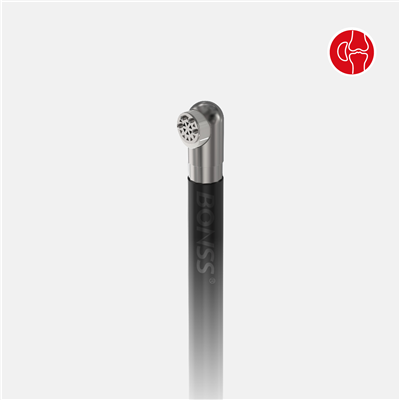
Today I want to break down what makes a solid endoscopic instrument, straight from the conversations I have with doctors in clinics and hospitals across the country. This isn’t some stuffy medical journal list; this is the real deal, the stuff that makes a 12-hour procedure bearable instead of a nightmare.
Let’s start with the part that’s non-negotiable: image quality. I’ve seen doctors reject a $5k scope just because the image was too grainy to spot a tiny polyp that could turn into cancer in two years. Back in the early 2010s, a lot of budget scopes used CCD sensors that looked like they were taken from a 2008 phone camera. Now we use CMOS sensors with 4K resolution, but it’s not just about pixel count. Good scopes have dynamic range—meaning if there’s a shadow behind a fold in the colon, you don’t lose detail there. I had a pulmonologist tell me last month that he once missed a pre-cancerous lesion in the bronchial tree because a cheap scope’s image washed out when he tilted the tube toward a dark area. That’s why we test every sensor before it leaves our warehouse; we don’t let a blurry unit get to a clinic.
Next up: flexibility and maneuverability. Endoscopes have to twist, turn, and bend around organs that aren’t perfectly straight. The control dials on the handle—those little wheels the doctor uses to steer the tip—need to have enough resistance so you don’t accidentally yank the scope into tissue, but not so stiff that your hand gets tired after 30 minutes of turning them. I’ve heard doctors complain about scopes where the tip drifts if you don’t hold the dial just right. That’s a flaw in the wire routing inside the scope. Good scopes have interlocking wire loops that keep the tip stable, even when you’re navigating a sharp turn in the duodenum. Also, the insertion tube itself shouldn’t be too thin (it can’t fit all the tools) or too thick (it hurts the patient). We’ve found the sweet spot for most upper GI scopes is 9.8mm outer diameter—thin enough to be comfortable for the patient, thick enough to hold a biopsy channel that works every time.
Speaking of the biopsy channel, that’s a big one I don’t see enough vendors talk about. The channel is where you send forceps, sutures, or ablation tools through, and if it’s not smooth, tools get stuck. I once had a surgeon tell me a scope he bought from a discount vendor had a channel where the biopsy forceps would catch every 2 seconds. He had to pull it out, fix the tool, and restart mid-procedure, which added 20 minutes to the surgery. Modern channels have a Teflon lining that’s ultra-smooth, but also durable enough to not get scratched after 100 uses. Scratches in the channel are a breeding ground for bacteria too—more on that later. Some vendors cut corners here by using cheaper linings that wear out after 50 uses. We design our channels to last at least 150 procedures before needing a check, which saves hospitals thousands in replacement costs.
Durability and repairability. Let’s be real: scopes are fragile. They get dropped, they get twisted, they get exposed to harsh disinfectants. A good instrument shouldn’t break after 20 uses. The outer coating of the insertion tube is often the first thing to go—cheap coatings chip, and once that happens, the tube starts to tear. We use a thermoplastic polyurethane (TPU) coating that’s been tested to resist tears from 50lb of pull force, which is more than enough for any procedure. But even if a scope does break, what’s the point if you can’t fix it? I’ve talked to doctors who had to throw away a $8k scope because the vendor didn’t sell replacement parts. That’s garbage. Our instruments are designed with modular parts—control dials, light cords, even the tip can be swapped out without sending the whole scope back to the manufacturer. A clinic can do most basic repairs in-house, which cuts downtime from weeks to hours. That’s a game-changer when you have only two scopes for a 20-procedure day.
Sterilization compatibility is another must. Endoscopic instruments have to go through autoclaves, liquid chemical disinfection, or automated reprocessors, and not all materials hold up. I’ve seen scopes where the light cord started to crack after 10 autoclave cycles because the vendor used cheap rubber. That’s not only a safety hazard—leaking electrical components can shock patients—but it also means the scope has to be taken out of service until it’s fixed. Good instruments use medical-grade silicone for parts that go through high heat, and all materials are tested to not leach chemicals during sterilization. Also, the scope should have as few nooks and crannies as possible where bacteria can hide. Smooth surfaces, no crevices around the control dials, that’s non-negotiable. The CDC has strict guidelines on endoscope reprocessing, and any instrument that doesn’t meet those guidelines is a liability for the clinic.
Ergonomics for the whole team. It’s not just the doctor holding the scope—nurses and techs have to work with it too. The handle shouldn’t be so big that a nurse with small hands can’t hold it when they’re passing tools. The light cord and air/water valves should be positioned so they’re not in the way during the procedure. I’ve designed our scopes with a balanced handle that weighs only 250g—way lighter than some heavy scopes out there. A doctor doing an 8-hour colonoscopy day will have less hand fatigue, which means fewer mistakes. Also, the water jet function should be easy to activate with a thumb, not something you have to twist your hand to reach. Small details, but they add up to a lot less strain for the team that’s working 12-hour shifts.
Wait, let’s not forget the little tech features that make a big difference. Things like a built-in marker to show how far the scope is inserted—no more guessing if you’re too deep or too shallow. Some scopes now have narrow-band imaging (NBI) that makes pre-cancerous lesions stand out without adding extra cost. I know a lot of clinics think NBI is a “nice to have,” but when you’re searching for tiny polyps that could be missed in normal light, it’s a life-saver. Also, the air and water flow should be consistent. Nothing’s more annoying than when the scope won’t blow air to inflate the colon, or the water jet is so weak you can’t clean the lens. We test every unit for flow rate before it ships, so doctors don’t run into that mid-procedure.
I’ve had doctors tell me that the cheapest scope is actually the most expensive in the long run. Because if it breaks often, requires constant repairs, or misses things because of bad image quality, you’re paying way more than the upfront cost. A good endoscopic instrument is an investment, not a purchase. It’s what lets doctors do their best work, keep patients safe, and not stress about tools failing when it matters most.
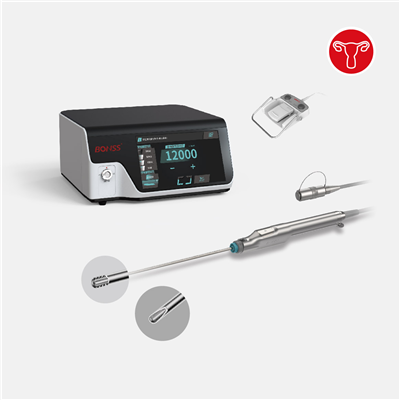
Gynaecology and Urology Surgical Power Systems If you’re a clinic manager, a lead surgeon, or a procurement specialist looking to upgrade your scope set, I get it—you have a lot of options out there. I’ve been in this space long enough to know that the best way to pick a good instrument is to talk to the people who use it every day. We don’t push fancy add-ons that no one needs; we build scopes based on the feedback we get from doctors like you. If you want to chat, ask questions, or see our scopes in action, reach out. We can walk through how our instruments fit your clinic’s workflow, answer any questions about durability or image quality, and help you find the right tools for your team.
References
- American College of Gastroenterology. Clinical Practice Guidelines for the Use of Endoscopic Devices. 2021.
- Society of Gastroenterology Nurses and Associates. Standards for Reprocessing of Flexible Endoscopes. 2022.
- Food and Drug Administration. Endoscope Safety: A Review of Device Design and Performance Requirements. 2020.
- European Society of Gastrointestinal Endoscopy. Maneuverability and Ergonomics in Endoscopic Instruments. 2021.
- CDC. Guidelines for the Prevention of Healthcare-Associated Infections Related to Flexible Endoscopy. 2019.
Jiangsu Bonss Medical Technology Co., Ltd.
As one of the most professional endoscopic instruments manufacturers and suppliers in China, we’re featured by quality products and good price. Please rest assured to buy bulk endoscopic instruments for sale here from our factory. Customized orders are welcome.
Address: Building #7,No.898,China Medical City Avenue, Haling District, Taizhou City.Jiangsu P.R. China
E-mail: inquiry@plasma-surgical.com
WebSite: https://www.bonssmedical.com/
