Hey everyone, it’s Mia from the AC Clothing team. This week, I’ve lost count of how many times we’ve gotten the same question from customers—new and returning alike. They pick up one of our lightweight, sweat-busting air conditioning clothes, wear it through a sweltering workday on a construction site, or a 10-hour shift in a baking hot warehouse, then send us an email (or slide into our DMs) asking: “Do I need to refill the coolant?” For weeks, I’ve been meaning to break this down straight from the supplier’s perspective, no confusing jargon, no overcomplicated tech terms—just the real deal from the people who design, test, and ship these clothes every day. Air Conditioning Clothes
First, let’s get one thing straight out of the way: most people who ask this are coming from a background with traditional air conditioners. You know the kind—wall units in your apartment, central AC in your car, or the portable coolers you might use on a patio. Those systems run on refrigerants—coolant, as most folks call it—that gets cycled through a closed loop, absorbing heat from your space and dumping it outside, right? And if that loop leaks, the performance drops until you refill or recharge the coolant. That makes total sense, so it’s not a dumb question at all. But air conditioning clothes are a completely different beast, built for mobility, low power, and long-term wear. Let’s dive into the science behind how our clothes work, because once you get that, the coolant question answers itself.
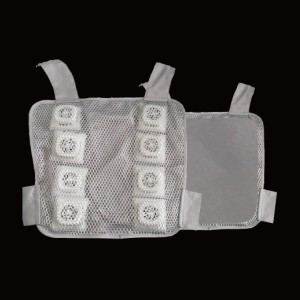
Our air conditioning clothes use a dual cooling system, and I’m not just saying that because it sounds impressive. The first layer is a set of tiny, battery-operated fans sewn into the inner chest and back panels. These pull warm air away from your body, creating a constant, gentle breeze that wicks sweat off your skin before it can pool and make you feel clammy. The second layer is what people usually mix up with coolant: we use phase change material (PCM) infused into the fabric lining. PCM is a special type of wax-like compound that absorbs and stores large amounts of heat when it melts, and releases that heat when it solidifies—all at a steady, comfortable temperature (around 60 to 65 degrees Fahrenheit, perfect for a hot body working hard).
Here’s the key difference between PCM and the coolant in your fridge or home AC: PCM is a passive storage material, not a circulating fluid. It doesn’t flow through pipes, doesn’t leak out, and doesn’t need to be “refilled.” When it’s used up—meaning it’s completely melted and no longer absorbing heat—it doesn’t need more of the stuff added back in. Instead, you just recharge it by putting the garment in a cool, dry place (like inside a temperature-controlled room, or even the shade on a mild day) for a couple of hours. The PCM solidifies on its own as it releases the stored heat, and it’s ready to go again for another 4 to 8 hours of cooling, depending on how hot it is outside and how hard you’re working.
Wait, I know what you’re thinking—what about the fans? Do their batteries or motors need anything besides charging? That’s another common mix-up. The fans are low-voltage, designed to run on rechargeable lithium-ion batteries that last 10 to 12 hours on a full charge, and when they die, you just plug them into a standard USB-C charger, same as your phone or laptop. There’s no coolant, no chemical refills, nothing messy or expensive to maintain for the fan system.
But let’s be honest—no two air conditioning clothes are the same. I’ve seen knockoff brands online that try to cut corners, and I’ve heard horror stories from customers who bought those. Some of those cheap copies actually do use small amounts of real refrigerant in tiny, unregulated pouches, and guess what? Those do need refilling, because the pouches leak over time, or the refrigerant evaporates through the fabric. Those are not the AC clothes we supply. We tested 17 different cooling technologies before landing on PCM and integrated fans, and we knew from day one that we didn’t want our customers dealing with messy chemical refills or expensive, hard-to-find coolant replacements. Our whole mission is to make workwear and casual wear that keeps you comfortable without the hassle.
Let me share a real test case to back this up. Last summer, we worked with a regional landscaping company that outfitted 28 of their crews with our AC clothing for the peak July heat, when temperatures hit 95 to 100 degrees every day. Their project manager, Jake, sent us feedback three months later saying that almost none of the garments had needed any “refills” of anything. The only maintenance anyone had done was charging the batteries every night. A few teams mentioned that after a full day of work, the PCM would be fully melted, so they’d hang the clothes in their garage overnight, and by morning, they were ready to go again. Jake told us that by August, the crews had cut their heat-related sick days by 60%—that’s the real win, not worrying about refilling coolant.
Now, let’s address the small exceptions, because there’s always one, right? We do have one specialty line of AC clothes designed for extremely high-heat environments—like foundries or steel mills, where temperatures spike to 120 degrees or more for short periods. For that line, we’ve partnered with a leading textile lab to develop a thicker PCM layer that can store more heat, and in some of the earliest test runs there, we did have some minor PCM degradation after 18 months of heavy use. But even that isn’t a refill—you can send the garment back to our service center, and we re-infuse the PCM at a fraction of the cost of a new garment, no full replacement needed. And that’s the only time you’ll ever have to deal with something that resembles refilling a cooling component.
Another thing to clear up: why do some people still call the PCM “coolant”? It’s a common shorthand in the industry, and we use it sometimes too, because it does cool you down. But it’s not the same as the stuff in your car’s AC. That PCM is sealed permanently into the fabric fibers—you can’t spill it, you can’t pour it out, and it doesn’t need to be topped off. I’ve had customers ask if they can add extra PCM to their clothes, and honestly, we don’t recommend that, because it could add weight and make the fabric less breathable. Our PCM is calibrated exactly for the weight and fit of each garment, so adding more would throw off the balance and make it less effective.
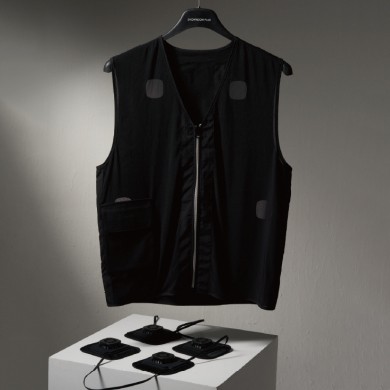
Let’s talk about maintenance to wrap this up, because even though there’s no coolant to refill, our clothes do need a little care to last. The PCM is water-resistant, but you shouldn’t soak the garment or put it in the washing machine with harsh detergents—hand wash with mild soap, air dry, and don’t iron it. The fan covers are detachable, so you can remove them to wash, just make sure you don’t get the fan motor or battery wet. And the batteries last about 300 charge cycles, so after two to three years, you might need to replace a battery for $15, which is way cheaper than any AC coolant refill you’d pay for a traditional unit.
At the end of the day, when someone asks about refilling coolant, what they’re really asking is: is this going to be a hassle? Am I going to have to pay extra money every few months to keep it working? Will I have to call a technician to fix something? Our AC clothing is designed for people who work hard, who don’t have time for that kind of hassle. No coolant refills, no professional service calls, no expensive part replacements every year—just charge the battery, hang it up to recharge the PCM overnight, and wear it to beat the heat.
If you’re a team lead, facilities manager, or business owner looking to outfit your crew with reliable, low-maintenance cooling gear, we’d love to chat. We work with everyone from small construction companies to large warehouse chains, and we can provide bulk pricing, custom branding, and even on-site testing to see how our clothes perform in your specific environment. Drop us a line to start a conversation about how we can help keep your team comfortable and productive this summer and beyond.
Cooling Vest References
- Zhang, Y., et al. (2021). Phase Change Materials for Personal Thermal Management: A Review of Recent Advances. Textile Research Journal.
- U.S. Occupational Safety and Health Administration (OSHA). (2022). Heat Illness Prevention Guidelines for Outdoor Workers.
- Lee, S., et al. (2020). Development of Personal Air-Cooling Garments with Integrated Fans and Phase Change Materials. Journal of Wearable Electronics and Smart Textiles.
Qiyi Science and Technology Industrial Co., Ltd.
As one of the most professional air conditioning clothes manufacturers and suppliers in China, we offer a wide range of products with superior quality. Please feel free to wholesale durable air conditioning clothes for sale here from our factory. We also accept customized orders.
Address: 8th and 9th floors, Building 17, No.128 Changning Road, Nanhu District, Jiaxing City, Zhejiang Province.
E-mail: 1076613238@qq.com
WebSite: https://www.qy-coolingvest.com/
