If you’re a facility manager, electrical engineer, or maintenance tech who’s ever stood in front of a bank of high-voltage fuses, watching a fault arc flash across a switchgear panel and wondering “how fast will this thing actually work?”—you’re not alone. For 12 years, I’ve walked alongside customers just like you, troubleshooting fuse failures, upgrading old equipment, and learning that response time isn’t just a spec on a data sheet—it’s the difference between a 15-minute outage and a full-day shutdown, between a $2,000 repair and a $50,000 safety hazard. Today, I’m pulling back the curtain on what “response time” actually means for high-voltage fuses, debunking common myths, and sharing the real-world context that most suppliers leave out. High-voltage Fuse
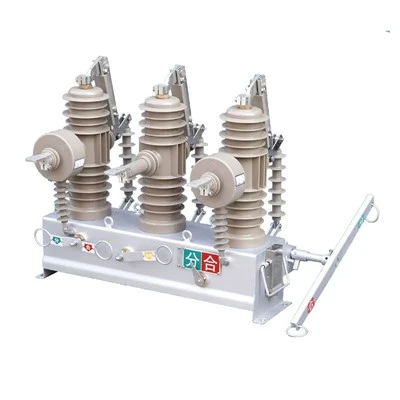
First, let’s get one thing straight: high-voltage fuses don’t have a single, universal response time. It’s not a number you can look up in a catalog and call it a day. The reason for that is simple: fuses don’t “react” instantly to overcurrent or short circuits the way a circuit breaker might. Instead, they work on a physical principle: a thin metal element inside the fuse melts when heated by excess electricity, and then quenches the resulting arc (the spark that happens when current jumps across a gap) before it can cause damage. The time that takes depends on three key factors: the magnitude of the fault current, the type of fuse you’re using, and the voltage of the system it’s protecting. Let’s break each of these down, because that’s where most of the confusion starts.
Let’s start with fault current, because it’s the biggest driver of speed. I remember a customer in Ohio who had a 13.8 kV distribution feeder protecting a small manufacturing plant. A squirrel chewed through two phase conductors, creating a bolted short circuit—meaning the fault current was extremely high, around 25,000 amps. That fuse, which was rated for 200 amps nominal, blew in 0.008 seconds. To put that in perspective, a blink of an eye is about 0.25 seconds—so that fuse reacted in just 3% of the time it takes you to blink. On the flip side, that same fuse, if it’s dealing with a minor overload—say, a 300 amp continuous draw from a faulty motor winding—would take 12 full seconds to blow. That’s a night and day difference, and it’s why “response time” is always a range, not a single number.
The type of fuse matters just as much as fault current. When I started in this business 12 years ago, most of the fuses we sold were “expulsion type” fuses—older designs that work by venting hot gases out the end of the fuse when it melts, extinguishing the arc as it goes. Those fuses are cheaper, but their response times are slower. Expulsion fuses typically take 0.01 to 0.1 seconds for high fault currents, and longer for overloads, because they rely on that gas pressure to break the arc. Today, the majority of our business is in “current-limiting” fuses, which are engineered to interrupt fault currents so fast that they actually reduce the total amount of current that gets to the fault—they don’t just break it, they limit it. Current-limiting fuses are the workhorses for industrial, commercial, and utility applications where speed is non-negotiable. Their response times for maximum fault currents? We’re talking 0.001 to 0.008 seconds—so 1 to 8 thousandths of a second. That’s fast enough to prevent arc flash incidents, which is the leading cause of electrical injuries in the U.S. according to OSHA. I’ve seen a current-limiting fuse blow in less time than it takes a relay to send a signal to a breaker, which means it’s often the first line of defense.
Voltage is the third factor people overlook. A fuse rated for 15 kV won’t have the same response time as a fuse rated for 35 kV, even if they’re the same current rating. Higher voltage systems have more energy stored in the arc, so fuses have to work harder and faster to extinguish it before the arc restrikes. A 35 kV current-limiting fuse might have a maximum response time of 0.006 seconds, compared to 0.008 seconds for a 15 kV model, because the arc energy is higher and demands a quicker interruption. That’s why you can’t mix and match fuses from different voltage classes—using a 15 kV fuse on a 35 kV system would not only be a safety hazard, it would have a slower response time than it’s designed for, putting your equipment at risk.
Now, let’s talk about the difference between “total response time” and “clearing time,” because that’s another point that gets muddled in technical docs. The total response time is the time from when the fault occurs to when the fuse is fully clear—meaning the arc is extinguished and current flow is stopped. For current-limiting fuses, that includes two parts: the “pre-arcing time” (the time it takes for the fuse element to melt) and the “arcing time” (the time it takes to extinguish the arc). For high fault currents, the pre-arcing time is almost negligible—most of the total response time is arcing time, which is why they’re so fast. For low-level overloads, the pre-arcing time dominates, which is why those fuses take longer to blow. If you read a fuse’s data sheet, you’ll see a “minimum melting time” curve and a “total clearing time” curve—those two lines cross at around the fuse’s “rated interrupting current,” and that’s where the fuse is at its fastest.
I want to be clear here: response time isn’t just about speed. It’s about matching the fuse to your specific application. I’ve had customers come to me saying they want the fastest fuse on the market, but when we look at their system, a super-fast current-limiting fuse is overkill for their 480 V motor control center. That overkill would cost them 2 to 3 times more than a standard time-delay fuse, and wouldn’t provide any additional benefit for their low fault current levels. Conversely, I’ve also had a utility customer in Texas that used expulsion fuses on a 138 kV transmission feeder—they thought they were saving money, but during a fault, the slow response time of the expulsion fuse allowed the arc to restrike twice, causing a 2-hour outage for 12,000 customers. That’s the kind of mistake that makes me sit down with every customer to walk through their exact load profile, fault current levels, and safety requirements, instead of just pushing the highest-speed fuse we have.
Common myths get tossed around all the time, and I hear them from customers constantly. The first myth is: “A higher amp fuse blows faster than a lower amp fuse.” No way—fuse speed is inversely related to the current passing through it, not its rating. A 100 amp fuse will blow faster at 5,000 amps than a 200 amp fuse will at the same current, because the thinner element in the 100 amp fuse heats up quicker. That’s a key point for sizing: you don’t just pick a fuse that matches your load, you pick one that will blow at the right speed for your fault current levels. Another myth: “All high-voltage fuses interrupt the same amount of current.” Wrong—each fuse has a rated interrupting current, the maximum fault current it can safely clear. If a fault exceeds that, the fuse won’t blow fast enough, and you risk a catastrophic failure. I’ve seen that happen once, early in my career— a customer tried to use a 100 amp fuse rated for 15,000 amps on a feeder that had a 25,000 amp fault current, and the fuse exploded, damaging the switchgear and almost injuring a tech. That’s why interrupting rating is just as important as response time.
So, how do you figure out the right response time for your application? That’s the conversation we have with every customer when they reach out. We start by getting your system voltage, maximum fault current, load type (motor, transformer, distribution line, etc.), and your priority for uptime and safety. For example, a data center backup generator system needs a fast response time—milliseconds—because downtime means lost revenue, and arc flash is a serious safety risk. A rural distribution feeder that only has a handful of customers might tolerate a slightly slower fuse, as long as it has the right interrupting rating. A motor control center that has inrush currents when motors start needs a time-delay fuse, so it doesn’t blow every time the motor kicks on—those fuses have a slower response time for low-level overcurrents, but still blow fast for high fault currents.
I’ve worked with so many customers over the years who bought fuses based on price alone, only to regret it when a fault happened. Low-quality fuses don’t have the consistent element sizing or arc-quenching material that premium fuses do, so their response times can vary by as much as 50%—one might blow in 0.005 seconds, the same model could blow in 0.01 seconds, and you can’t rely on that. All the fuses we supply go through third-party testing to ensure their response times are within the specified range, and we provide test data with every shipment, because we know that trust matters when you’re dealing with high-voltage equipment.
I also want to touch on a point that’s not always talked about: the long-term impact of fuse response time. A faster fuse doesn’t just stop a fault—it reduces the amount of energy that gets released during a fault, which means less damage to your downstream equipment, lower repair costs, and less downtime. For example, a current-limiting fuse that interrupts in 0.005 seconds reduces the total let-through energy by 80% compared to a slower expulsion fuse, which means your transformer, switchgear, and motors take less of a hit. That adds up over the life of your equipment—we’ve had customers tell us that switching to our current-limiting fuses extended the life of their 10-year-old transformers by another 15 years, because the let-through energy was so much lower.
Now, if you’re here because you’re facing a specific problem—your fuse is blowing too slow, you’re not sure if your current fuse is right for your system, or you’re planning an upgrade—don’t waste another minute guessing. Response time is a critical spec, but it’s only useful if it’s tailored to your exact needs. We don’t sell one-size-fits-all fuses, and we don’t just give you a number and send you on your way. We work with you to calculate your required response time based on your system, answer all your questions, and make sure you get the right fuse for your application.
If you’re ready to talk through your needs, or just have more questions about high-voltage fuse response times, reach out to our team. We’ve got engineers on staff who can walk through your system details, share real-world case studies from similar applications, and help you make a decision that keeps your facility safe and running smoothly. No jargon, no pushy sales pitches—just practical advice from people who’ve been in the field, seen the mistakes, and know what works.
References
Load Switch IEEE Std C37.41-2019, IEEE Standard for High-Voltage Fuses – Definitions, Requirements, and Test Procedures
OSHA, Electrical Safety – Related Work Practices (29 CFR 1910.331-1910.335)
Electric Power Research Institute (EPRI), High-Voltage Fuse Application and Performance Guidelines, 2021
National Electrical Manufacturers Association (NEMA), Standard SG-6, High-Voltage Fuses for Alternating Current Systems, 2018
Zhongtai Electric Power Technology Co., Ltd.
With abundant experience, we are one of the most professional high-voltage fuse manufacturers and suppliers in China. We warmly welcome you to wholesale bulk customized high-voltage fuse from our factory. If you have any enquiry about quotation, please feel free to email us.
Address: High-tech Industrial Park, Chongren County, Fuzhou City, Jiangxi Province (No. 261 Yingbin Avenue)
E-mail: info@zhongtaielectric.com
WebSite: https://www.zhongtaipower.com/
