If you’ve ever hung around industrial energy teams, you’ve probably heard the quiet panic when biomass combustion comes up. Sure, biomass is cheap, carbon-neutral (or so we say), and way better than coal for the planet. But it’s messy. Sticks, wood chips, sawdust, even agricultural waste—none of it’s like coal, which is consistent in size, moisture, and energy density. Toss that messy stuff into a boiler, and you get patchy hot spots, unburnt gunk left at the bottom, and efficiency that drops faster than a hot potato left on a windowsill. As someone who’s spent the last decade building and tweaking biomass steam boilers (not just selling them), I’m here to break down how we make that chaotic fuel burn evenly—no matter what’s thrown at the feeder. Biomass Steam Boiler
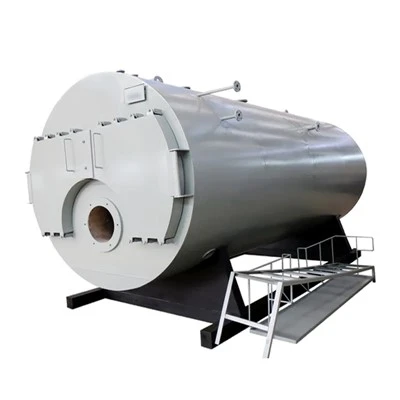
First off, let’s get one thing straight: uniform biomass combustion isn’t about making the fuel perfect. It’s about working with its imperfections. Unlike natural gas, which flows like water and burns predictably, biomass comes in all shapes, sizes, and moisture levels. I’ve seen loads of suppliers try to over-engineer sorting systems to get uniform fuel, and it never sticks. Farmers bring in wood chips with bits of dirt, sawmill offcuts that are 2-inch chunks and dust mixed together, even rice hulls that feel like confetti. Trying to sort every particle? That’s a waste of time and money, and it kills the whole point of using cheap, local waste as fuel. So we build our boilers to adapt to messy fuel, not fight it.
Let’s start with the feeder—this is the unsung hero of even combustion, and so many people sleep on it. A bad feeder is like trying to feed a cat at a dinner table: some bites get way too much food, others get none. Our feeders use variable speed augers, not that janky gravity drop most cheap boilers use. Gravity drops are great for uniform flow if your fuel is perfectly dry, consistent size, and has zero clumps. But real life? Clumps form when wet wood chips sit in a truck for a week, augers jam when there’s a mix of fine dust and big chunks, and suddenly you’ve got a full chamber of nothing but dust that burns hot fast, with a patch of cold clumps that never light. Our feeders have a sensor that checks fuel flow rate every two seconds. If it notices a slowdown (say, a clump stuck), it adjusts the auger speed to nudge it through instead of jamming. And we split the fuel feed into multiple ports across the boiler grate, not just one big dump in the middle. That way, you’re covering the entire grate evenly before it even starts burning. No more hot spot in the center and cold edges—easy, right?
Next up, the grate. This is where the rubber meets the road, literally. Grates for biomass aren’t one-size-fits-all. You’ve got moving grates, fixed grates, oscillating grates, even reciprocating grates. We picked reciprocating grates for most of our models, and here’s why: they’re like a conveyor belt that gently pushes the fuel forward as it burns, without mixing it up so much that ash gets everywhere. Wait, but why does that help with uniformity? Let’s think: when fuel first hits the grate, it needs air to dry out and ignite. If the grate is moving unevenly, some fuel sits in the ignition zone too long and burns too hot, while others move too fast and never fully light. Our reciprocating grates have small, staggered “paddles” that move back and forth at a slow, adjustable pace. If you’ve got wet fuel (say, harvested in rainy season), you slow the paddle speed down so it has time to dry before moving into the main combustion zone. If it’s super dry sawdust, you speed it up a little so it doesn’t burn all at once in a single hot spot. Also, the grates themselves have tiny air holes that are calibrated differently across zones. The ignition zone (where fuel first hits) has smaller holes—you don’t want that new fuel burning too fast before it dries. The middle combustion zone has bigger holes to pump in more air for maximum burn, and the ash zone at the end has the smallest holes again, so you don’t blow unburnt ash out the stack. That’s a tiny detail, but it makes a huge difference.
Speaking of air—oh man, air distribution is the make-or-break for uniform combustion. Most new boiler operators just crank the air flow full blast and hope for the best. Big mistake. Biomass needs three types of air, all at different stages of combustion: primary air, secondary air, and sometimes tertiary air. Primary air is what feeds the fire from below. If that’s uneven, half the fuel gets too much oxygen and burns hot, the other half gets too little and leaves char. Our primary air system is zoned, just like the grate. Instead of one big air plenum under the grate, we have four separate plenums, each with its own adjustable damper tied to a combustion sensor. The sensor (a cheap, reliable O2 sensor in the stack) checks oxygen levels every second. If zone 2 of the grate is running low on oxygen, it opens that zone’s damper a little more—no need to crank the whole system. Secondary air is what we add above the grate, after the fuel has ignited. This is for burning the volatile gases that come off biomass (you know, the smoke that makes a campfire smell good, but is wasted energy if it goes up the stack). If you don’t mix that secondary air evenly with those gases, they don’t burn, so you lose efficiency and get uneven heat. Our secondary air nozzles are angled at 15 degrees, pointing toward each other across the combustion chamber. That creates a gentle vortex that mixes the gases perfectly, so every last bit of volatile burns before it hits the boiler walls. No more black smoke, and no more unburnt fuel left at the bottom.
Wait, what about fuel moisture? That’s the other big wildcard. I’ve had customers call me in a panic because their wood chips came in at 50% moisture (that’s like half water, half wood) instead of the standard 20%. Sure, that’s bad, but our boilers aren’t phased. How? The ignition zone of the grate has extra primary air that’s pre-heated before it hits the fuel. Instead of pushing cold air in (which would douse a wet fire), we take hot flue gas from the boiler’s outlet, clean it, and use that to pre-heat the primary air in the ignition zone. That hot air helps evaporate the water out of the fuel as it sits in the ignition zone, so it ignites properly even when it’s soaked. We also add a small recirculation fan that pulls some of the hot flue gas and blows it into the top of the fuel bed, which speeds up drying even more. I tested this last year when a farmer’s truck got stuck in the mud and his wood chips sat in the rain for 3 days—his old boiler was spitting smoke and only hitting 60% efficiency, but our boiler pushed 88% that day, no issues. That’s the kind of thing that keeps our customers coming back.
Let’s be real, no system is perfect. Even with all this tech, you’ll get a chunk of metal in the fuel (I’ve seen it) or a wet clump that slips through. That’s why we added a small, automated cleaning system that’s super low-maintenance. It’s a set of rotating brushes above the grate that gently stir the top layer of fuel every 10 minutes, just enough to break up any clumps without messing up the even layer. It also pokes through small holes in the grate to knock ash loose, so ash doesn’t build up and block air flow. Ash buildup is a silent killer—if you’ve got a layer of ash 2 inches thick on part of the grate, that zone’s fuel gets no air, so it doesn’t burn. Our cleaning system stops that before it happens, so the air flow stays even across the whole grate.
I know a lot of people reading this are probably boiler operators or facility managers, and you’ve heard the sales pitch before: “our boiler is the most efficient!” But let’s cut the crap. Efficiency is great, but what you really care about is consistency. No more losing half your production because the boiler had a hot spot and tripped the safety switch. No more paying extra for fuel that’s perfectly sorted. No more spending 3 hours a day cleaning unburnt residue out of the boiler. That’s what our biomass steam boilers deliver—uniform combustion that doesn’t depend on perfect fuel or constant babysitting.
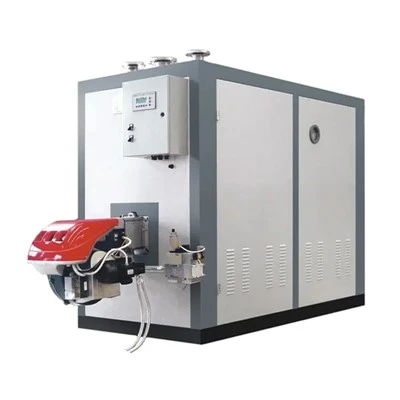
If you’re reading this and dealing with a biomass boiler that’s been giving you headaches—patchy burns, low efficiency, constant cleaning—hit us up. We don’t do pushy sales calls. We’ll send a rep to your site, take a look at your fuel, your current setup, and walk you through how our boilers would fix those issues. No fine print, no hidden fees, just straight talk about how to make your biomass steam boiler work for you, not against you.
LNG Refueling Equipment References
- Biomass Combustion Technology: A Practical Guide for Industrial Applications, International Energy Agency (IEA) Bioenergy Task 32, 2021
- Reciprocating Grate Design for Uniform Biomass Combustion, Journal of Industrial and Engineering Chemistry, Vol. 102, 2021
- Air Distribution Strategies for Low-Moisture Biomass Firing, Proceedings of the 14th International Conference on Energy Sustainability, 2020
Xinxiang Huayuan Container Equipment Co., Ltd.
With abundant experience, we are one of the most reliable biomass steam boiler manufacturers and suppliers in China. We warmly welcome you to buy durable biomass steam boiler made in China here from our factory. If you have any enquiry about cooperation, please feel free to email us.
Address: No.2, South Road, Industrial Cluster Zone, Genghuang Township, Fengquan District, Xinxiang City, Henan Province
E-mail: cncd527@gmail.com
WebSite: https://www.huayuanequipment.com/
