If you’ve ever worked on liquid filtration, gas separation, or even biotech processing, you’ve probably heard someone toss around the phrase “mass transfer coefficient” in a design meeting. For anyone shopping for tubular modules—whether you’re upgrading an existing process or testing a new application—this term isn’t just academic jargon; it’s the number that will make or break your equipment’s efficiency, throughput, and bottom line. As someone who’s spent 12 years selling, troubleshooting, and perfecting tubular modules for industrial use, I get that this topic can feel overwhelming at first. Today, I’m breaking down what the mass transfer coefficient is, why it matters specifically for tubular modules, and how you can use it to pick the right equipment for your needs. Tubular Modules
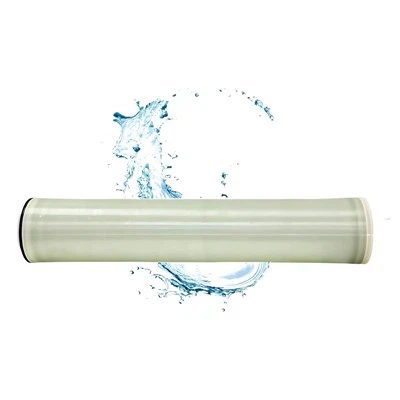
First, let’s start with the basics, no fancy equations required. Mass transfer, at its core, is just the movement of a substance from one point to another. Think of it like pouring a cup of cold coffee into a pot of hot water: over time, the cold coffee molecules spread out until the whole pot is a uniform temperature. In industrial processes, this movement is never random or passive. It happens through devices like tubular modules, which are long, hollow tubes bundled together (think of a tube heat exchanger, but designed for separating or moving molecules instead of just heating/cooling fluid) and used for everything from ultrafiltration in food and beverage to gas absorption in natural gas processing.
The mass transfer coefficient (usually shortened to “K_L” for liquid-phase processes or “K_G” for gas-phase) is the measurement of how well that movement is happening. It’s essentially a rate: higher numbers mean your substance moves between the two sides of the tubular module’s membrane or inner wall faster, so your process can run more, use less energy, and cost less over time. Lower numbers mean bottlenecks—you’re losing time on processing, wasting energy pushing fluid through, and maybe even getting lower purity product because the molecules don’t separate correctly.
Now, why does this work differently in tubular modules vs. other types of membrane modules (like flat-sheet or spiral-wound, which are more common in smaller applications)? Let’s talk about tubular module design first. Our tubular modules have inner diameters ranging from 6 mm to 25 mm, with a porous lining that acts as the separation barrier. The fluid flows through the inside of these tubes, so there are two main paths mass transfer can take: either the substance you want moves through the porous wall of the tube to the other side (that’s the permeate side, where your purified product goes), or unwanted particles stay inside the tube and get carried away in the retentate stream.
The mass transfer coefficient for tubular modules is tied directly to three key design and operational factors, and these are exactly where our team can help you get it right, not just sell you stock modules.
First: flow velocity inside the tubes. This is the biggest lever you can adjust, and it’s one of the main reasons tubular modules shine compared to other designs. Because the tubes are large in diameter (way larger than spiral-wound membranes, which are usually 1-2 inches in diameter), you can push fluid through at much higher velocities without clogging or causing excessive pressure drop. When flow is fast inside the tube, two things happen that boost mass transfer: the boundary layer—the thin, stagnant layer of fluid that sticks to the inner tube wall and slows down molecule movement—gets thinner. Think of it like running through a crowd: if the crowd is standing still, you can barely move, but if everyone is walking quickly, there’s less resistance to moving through. The thinner boundary layer means your target molecules don’t have to fight their way through a thick, slow layer to reach the tube wall. Second, high flow creates turbulence inside the tube, which dislodges any small particles that might be building up on the wall. No buildup means no drop in mass transfer over time—something that’s a huge problem in smaller flat-sheet modules, where stagnant flow leads to fouling (clogging) and plummeting K_L values after just a few days of use.
Second: tube inner surface finish and lining material. At our factory, we machine and coat every tubular module’s inner lining to match the fluid it’s handling, and this directly impacts mass transfer coefficient. For example, if you’re processing dairy products like whey, you need a lining that won’t let proteins stick to the wall. We use a smooth, food-grade polyethylene lining here, which reduces adhesion of protein molecules, keeping the boundary layer thin and K_L high. For harsh industrial fluids, like acid gas streams, we use a ceramic lining that’s highly porous and has a consistent pore structure, so molecules pass through evenly without getting trapped in irregular surface crevices. A rough or inconsistent inner surface creates extra stagnant spots where particles can build up, and it also makes it harder for molecules to cross the wall at a uniform rate—so you end up with a lower, less reliable mass transfer coefficient.
Third: module length and flow configuration. Most people don’t think about this, but how you arrange the tubes inside the module’s housing affects mass transfer too. We offer two common configurations: straight-tube modules and shell-and-tube modules with internal baffling. Straight-tube modules are great for high-velocity flow because there’s nothing disrupting the path of the fluid inside the tubes. Baffled shell-and-tube modules, on the other hand, are better for gas separation, where we want the gas stream to cross back and forth across the tube bundle, increasing contact time between the gas and the tube walls. The right configuration depends on your process, and we’ve found that adjusting this can boost mass transfer by up to 30% in some applications, just by changing how the fluid moves through the module.
Now, let’s get practical—how do you use the mass transfer coefficient to evaluate different tubular modules, not just guess? I can’t tell you how many times I’ve heard a customer say, “I need a tubular module that can filter 10,000 liters a day” without mentioning what they’re filtering, or what purity they need. The mass transfer coefficient is the link between your process requirements and the module’s performance.
Let’s take a common example: a craft brewery that wants to filter yeast out of their unfermented wort, and also remove unwanted bacteria to extend shelf life. The brewery needs two things: they have to process 8,000 liters of wort per day, and they can’t lose more than 2% of their target flavor compounds (which are small, complex molecules) in the process. Here’s where the mass transfer coefficient comes in. If a module has a K_L of 2.5 x 10^-5 m/s, that’s a good baseline for wort filtration. But if you pick a module with a K_L of 1.2 x 10^-5 m/s, you’ll need 50% more modules to hit your throughput target, which doubles your upfront cost, and the longer residence time in the module will make more flavor compounds stick to the wall, increasing your product loss.
Another example: natural gas processing, where you need to separate carbon dioxide from methane. A higher gas-phase mass transfer coefficient (K_G) means your tubular module can remove more CO2 in a single pass, so you don’t have to run the gas through multiple modules in series, cutting down on energy used to pump the gas through each step. We’ve worked with a regional natural gas producer that switched from their old flat-sheet modules to our tubular modules, and their CO2 removal rate jumped 28% because of the higher K_G, even though they used the same number of modules.
Here’s the thing to remember about the mass transfer coefficient for tubular modules: it’s not a static number that’s printed on a spec sheet. A lot of suppliers will give you a “theoretical” K_L or K_G at lab conditions, but that number almost never translates to real-world operation. The actual mass transfer coefficient depends on how you run the module: flow velocity, temperature (higher temperature makes molecules move faster, so K_L goes up), and even the pH of the fluid. That’s why it’s so important to work with a supplier who will test your actual fluid in our in-house lab, not just send you generic data.
I can also share a common mistake we see customers make when they first start out with tubular modules. They look at the mass transfer coefficient and think, “Higher is better, so I’ll run my module at the highest possible flow velocity to get the biggest K_L.” But there’s a trade-off: higher velocity means higher pressure drop, which means you’re using more energy to push fluid through the module. You have to balance the mass transfer gain from higher flow with the energy cost of that flow. For most liquid applications, we recommend running at a velocity between 1 and 3 meters per second—this gives a strong K_L without excessive energy use. For gas applications, we usually aim for a superficial velocity of 0.5 to 1 m/s, which hits that same balance.
Another advantage of tubular modules that ties directly to mass transfer coefficient: they’re extremely easy to clean, which means they maintain their K_L over time. Spiral-wound modules, by comparison, get fouled quickly and their mass transfer coefficient can drop by 50% or more in just a few weeks of use, even with regular cleaning. Our tubular modules can be backflushed, chemically cleaned, or even physically scrubbed (for very stubborn fouling) without damaging the inner lining, so their K_L stays within 90% of the original value for years. That’s a huge long-term saving—you don’t have to replace modules every few months, and your throughput stays consistent.
Now, if you’re reading this and wondering how this applies to your specific process—whether it’s biopharmaceutical purification, industrial water treatment, food and beverage clarification, or any other application that uses tubular modules—don’t overcomplicate it. The first step is to get clear on two things: what you need to separate, and what your throughput and purity requirements are. Then, when you talk to a supplier, ask two questions: what’s the actual operational mass transfer coefficient for my type of fluid, and how will this module maintain that coefficient over time?
At our company, we’ve spent years refining our tubular module design to maximize the mass transfer coefficient for every use case, and we don’t just sell you a module and walk away. We work with every customer to test their process, adjust module configuration, and optimize operational parameters to get the best possible performance. Whether you’re a small business testing a new product line or a large industrial facility looking to upgrade your entire processing line, we can help you navigate the mass transfer coefficient and pick the right tubular modules that fit your needs and your budget.
If you’re ready to stop guessing about your equipment performance and start working with a supplier who focuses on real, measurable results, reach out to our team today to discuss your tubular module needs. We’ll walk you through everything from mass transfer coefficients to installation and long-term maintenance, no sales pitch required.
DTRO References:
- Geankoplis, C.J. Transport Processes and Unit Operations. Pearson, 2018.
- Li, K. Inorganic Membranes for Gas Separation. Elsevier, 2007.
- Porter, M.C. Handbook of Industrial Membrane Technology. Noyes Publications, 1990.
- Belfort, G. Membrane Science and Technology: Volume 6, Applied Membrane Science and Technology. Springer, 1990.
- Noble, R.D., and Stern, S.A. Membrane Separations Technology: Principles and Applications. Elsevier, 1995.
Hangzhou Nanoimp Environmental Technology Co., Ltd.
With abundant experience, we are one of the most professional tubular modules manufacturers and suppliers in China. Welcome to wholesale high quality tubular modules in stock here and get pricelist from our factory. We also accept customized orders.
Address: Road 25, Baiyang Street, Qiantang District, Hangzhou City, Zhejiang Province
E-mail: keith.wang@nano-sepmer.com
WebSite: https://www.nanoimp-membrane.com/
