If you’ve ever stopped mid-walk to glance at a bright, crisp outdoor LED display showcasing a local café’s grand opening, a city council’s public safety announcement, or a concert’s ticket giveaway, you know those displays don’t just appear overnight. For small business owners, municipal facilities, and event organizers, the biggest question before committing to a project isn’t just “can I put one here”—it’s “how much will this cost to install?” As an outdoor LED display supplier who’s walked through dozens of site assessments, negotiated with structural engineers, and answered late-night calls from clients panicking about hidden installation fees, I’m here to break down the real numbers, the variables that shift costs, and what you can expect when working with a trusted supplier. Outdoor LED Display
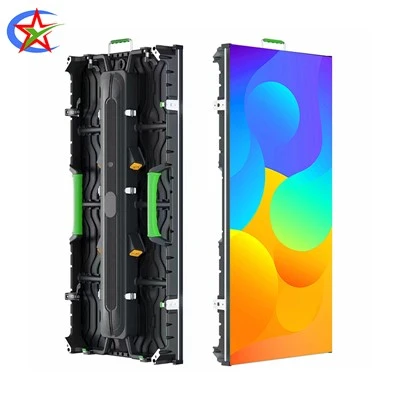
Let’s start with a myth bust: there’s no one-size-fits-all price for outdoor LED display installation. A 32-square-foot display mounted above a café’s storefront will have a drastically different cost than a 500-square-foot display mounted 30 feet above a highway overpass. That’s because installation costs depend on five core factors: the display’s size, mounting type, site accessibility, local regulations, and power and connectivity requirements. To make this concrete, I’ll use actual numbers from projects I’ve supported over the past three years, ranging from small retail displays to mid-sized municipal installations.
First, the display itself is the base, but installation isn’t just bolting a screen to a wall. Let’s break down each factor one by one, starting with size, because that’s the most intuitive. A P3.91 outdoor LED display (a common medium-brightness option for pedestrian areas) measures, say, 10 feet wide by 8 feet tall, giving 80 square feet of display area. For a retail storefront, installing that on a existing masonry wall might cost $1,200 to $2,500 in labor and materials, depending on how many mounting brackets are needed. Now, scale that up to a 400-square-foot display (20 feet wide by 20 feet tall) for a shopping center’s exterior wall. If it’s mounted on a structure that’s already there, installation jumps to $5,000 to $8,500. But if that same display needs to go on a freestanding pole or a steel truss, that’s a whole other ballgame. Freestanding mounts require custom engineering to ensure the display can withstand wind, snow, and even seismic activity, depending on your location. For a freestanding pole mount, the base alone often needs a reinforced concrete foundation that can weigh 10,000 to 20,000 pounds. That foundation work adds $3,000 to $7,000, on top of the mounting labor and materials, pushing that 400-square-foot display’s installation cost to $9,000 to $16,000. For larger displays—like 1,000 square feet or more, often used for highway billboards or festival venues—installation can hit $25,000 to $45,000, and that’s not including any regulatory fees.
Next, mounting type drives more cost than most clients expect. I’ve had a client come to me thinking they just need a screen—they didn’t realize a storefront mount is way cheaper than a cantilevered mount that juts over a sidewalk for visibility, or a roof mount that needs to account for the building’s structural load. Cantilevered mounts, which are popular for retail storefronts that want to draw attention away from the ground, add $1,500 to $4,000 in extra steel fabrication and engineering because you’re supporting weight away from the building’s main structure. Roof mounts are trickier, too: if the roof can’t support the display’s weight, you’ll need to add structural reinforcements, which can add $5,000 to $10,000. And for displays mounted in hard-to-reach areas—like highway medians, remote event sites, or buildings with no ground-level access—accessibility becomes a huge cost driver. A standard installation uses a 50-foot boom lift, which rents for $200 to $400 a day. But if your display is on a 100-foot pole in a highway median, you’ll need a specialized truck-mounted lift, which can run $1,000 to $2,500 a day, plus permits for lane closures (another $500 to $1,500 per closure). I once worked on a display for a rural festival venue where the nearest road was a mile away, so we had to use a crane to transport all mounting materials to the site, adding $3,000 to the total installation cost just for equipment transport. That’s a detail no one thinks about until it’s time to get the gear there.
Then there’s site-specific requirements, which vary wildly by location. Let’s talk about structural engineering first: every outdoor display needs a professional structural assessment to make sure it can handle the local environment. Wind is the big one—areas near the Great Lakes or the coast have higher wind load requirements, so engineering reports and modifications cost 20% to 30% more than displays in low-wind regions. Snow load adds another layer: if you’re in a place that gets 2 feet of snow a year, the display and its mount have to support that extra weight, which means thicker steel, stronger brackets, and more engineering work. That can add $2,000 to $5,000 to installation depending on your climate. Local building codes and permits are another hidden cost. Most municipalities require a sign permit, which can cost $100 to $1,000 depending on the city. For larger displays, especially those near roads or public spaces, you might need zoning permits, noise permits, and even electrical permits from the local power company. I once had a client in a downtown historic district who needed a special variance to mount a display above their shop, adding $1,200 in permit fees and two months of wait time to the project. Some cities also require periodic inspections after installation, which add small recurring costs, but they’re non-negotiable for safety.
Power and connectivity are often afterthoughts, but they make up a big chunk of installation cost. Outdoor LED displays need consistent, reliable power, usually 110V for small displays and 220V or three-phase power for larger ones. If the display is within 50 feet of an existing power outlet, running the wire is a quick job, costing $500 to $1,500. But if it’s 100 feet away, or needs to connect to a separate utility line for safety, you’re looking at $2,000 to $5,000 for wiring, conduit, and electrical labor. For displays mounted on freestanding poles far from a building, some clients opt for solar power, which is popular for remote sites. Solar installations add $3,000 to $7,000 in panels, batteries, and wiring, but they eliminate monthly utility bills, which can save money long-term. Connectivity is another piece: to run content on your display, you’ll need either a hardwired Ethernet connection or wireless (Wi-Fi or cellular). For most urban displays, Ethernet is most reliable, running $300 to $800 to install, plus monthly service fees. Cellular is popular for remote sites, with $200 to $500 in setup and $10 to $30 a month for data.
Now, let’s put this all together with real, recent projects I’ve managed to make the numbers feel less abstract. First project: a small café in suburban Chicago, getting an 80-square-foot P3.91 display mounted on their storefront wall. Size: 80 sq ft. Mounting: existing wall, no cantilever needed. Site: flat, accessible, no structural modifications. Regulations: standard suburban permit, no extra variances. Power: existing outlet 20 feet away. Total installation cost: $2,800. That’s on the lower end, which is why small retail displays are so popular for local businesses. Second project: a municipal park in Denver, getting a 300-square-foot display mounted on a 30-foot freestanding pole. Size: 300 sq ft. Mounting: freestanding, required reinforced concrete foundation. Site: remote park, accessible by gravel road, boom lift accessible. Regulations: city sign permit, wind load engineering (Denver’s high altitude means 110 mph wind requirements). Power: existing utility line 150 feet away. Total installation cost: $12,700. That’s mid-range, perfect for community announcements or event updates. Third project: a shopping center in Los Angeles, getting a 600-square-foot display mounted on a roof, with a cantilevered front to catch street view. Size: 600 sq ft. Mounting: cantilevered roof mount, required structural reinforcement. Site: downtown, boom lift only accessible during off-peak hours, required lane closures for access to the roof. Regulations: downtown zoning permit, historic district variance, fire department inspection. Power: three-phase line 200 feet away. Total installation cost: $28,500. That’s on the higher end, which makes sense for high-visibility commercial locations.
Now, what are common mistakes I see clients make that add unnecessary cost? First, skipping the pre-installation site assessment. I always include a free site assessment for new clients, because visiting the site early lets me spot hidden issues—like a rotting wall that can’t support the display, or a utility line that’s in the way of mounting—that would cost thousands to fix after the fact. One client tried to skip the assessment for their highway overpass display, and we ended up having to reroute a gas line, adding $4,000 in unplanned costs. Second, choosing the cheapest mounting materials. Some clients go with thin steel brackets to save money, but that’s a safety risk and will void any warranty. I always recommend hot-dip galvanized steel for outdoor displays, which resists rust and corrosion, even in coastal or snowy areas—worth the extra $500 to $1,000 in materials to avoid replacement costs down the line. Third, underestimating content management costs. Most displays require a subscription for software to run and update content, which isn’t part of installation, but I always make sure clients know that upfront so there are no surprises.

So, what does this mean for you if you’re planning an outdoor LED display? The best first step is to reach out to a reliable supplier (that’s me, and my team) to schedule a free site assessment. During that assessment, we’ll measure the site, check structural load, review local regulations, and give you a tailored installation quote, no hidden fees. We’ll also walk you through every variable, so you understand exactly where your money is going: foundation, mounting, labor, permits, power, and connectivity. Whether you’re a small business looking to promote your grand opening, a city needing to share public safety updates, or an event organizer wanting to draw crowds, we can work with your budget to find a display and installation plan that fits. If you’re tired of guessing at costs and want a transparent, no-pressure walkthrough of your project, we’re here to help.
Outdoor Fixed LED Display References:
- LED Professional Association. (2023). Outdoor LED Display Installation Best Practices.
- National Association of Signage Manufacturers. (2024). Guide to Structural Requirements for Outdoor Digital Displays.
- International Code Council. (2023). International Building Code Chapter 7: Sign Construction and Installation.
- Solar Energy Industries Association. (2022). Off-Grid Solar Solutions for Remote Outdoor Digital Displays.
- City of Chicago Department of Buildings. (2023). Sign Permit Guidelines for Storefront Digital Displays.
Shenzhen Starcolor Optoelectronics Co., Ltd.
As one of the most professional outdoor led display manufacturers and suppliers in China, we’re featured by quality products and good price. Please rest assured to wholesale discount outdoor led display in stock here from our factory. Customized orders are welcome.
Address: 2nd floor, Building A, Hongjingda Industrial Park, Shiyan town, Bao’an District, Shenzhen
E-mail: starcolorled@outlook.com
WebSite: https://www.starcolordisplay.com/
