Hey there! If you’re a manufacturer, warehouse manager, or anyone juggling heavy materials on a daily basis, you’ve probably wondered: “Can’t my team just move stuff by hand?” Yeah, we’ve all been there—grabbing a pallet of parts, hefting a bag of grain, or corralling a steady stream of ingredients for a production line. But after 10+ years as a Feeding & Conveying Equipment supplier, I can tell you that ditching manual labor for these systems isn’t just a “nice upgrade”—it’s a game changer. Let’s break down the real, tangible advantages that turn daily headaches into smooth operations, no jargon required. Feeding & Conveying Equipment
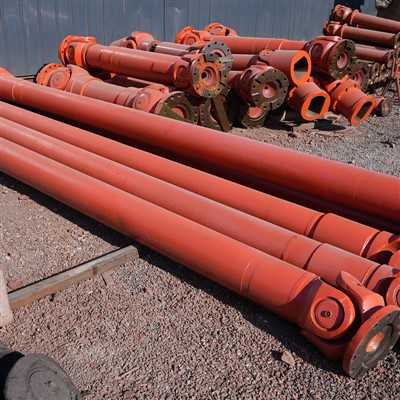
First off, let’s talk about the big one that every operations lead cares about: efficiency. Think about how much time your team spends hauling materials from Point A to Point B. Last year, we worked with a small food packaging plant where their line workers were spending 2 hours every shift just moving bags of sugar and flour between the storage silo and the mixing station. That’s 10 hours a week per worker—time they could’ve spent checking quality, fixing small issues, or even just not rushing to hit quotas. When we installed a flexible screw conveyor system for them, those 2 hours vanished. Now, the equipment feeds exactly the right amount of product right into the mixer, 24/7 with zero breaks. Their output jumped 18% in the first month, and they didn’t have to hire a single new person to keep up. And it’s not just about speed—conveying systems are consistent. Manual movement means human error: one day someone rushes and drops a bag, the next they take 10 minutes to find a forklift. Feeding equipment delivers a steady, precise flow every single time, which is make-or-break for production lines that rely on uniform material inputs. No more wasted product from uneven feeding, no more line stops because someone missed a load.
Then there’s safety—something that’s non-negotiable these days. I’ve seen way too many avoidable injuries from manual material handling: a back strain from hefting a 50lb bag of fertilizer, a cut from slipping on a spilled metal part, even a crush injury trying to maneuver a heavy pallet. OSHA says musculoskeletal disorders (MSDs) from lifting and carrying account for 30% of all workplace injuries, and that’s no small number. Our equipment cuts that risk almost entirely. For example, a construction materials client was using a team of workers to move gravel from a dump truck to a hopper, and they were dealing with at least 1 minor back injury a month. We put in a belt conveyor that transports gravel automatically, at a height that’s easy to access from the truck bed. Six months later, they had zero injuries from that task, and their workers were way more engaged because they didn’t have to do backbreaking labor. Conveying systems also contain materials so they don’t spill, which means fewer slip-and-fall hazards around the facility. No more mopping up spilled cornmeal or metal shavings mid-shift, no more tripping over loose pallets. It’s a win for your team’s well-being—and for your workers’ comp premiums, which tend to drop when injury rates go down.
Wait, let’s not forget about product quality, especially if you’re in food, pharma, or electronics. Those industries can’t afford even a tiny bit of contamination or waste. Manual handling means touching materials with bare hands, dragging bags across dirty floors, or dropping them on the ground—all of which can introduce dirt, oils, or foreign objects. Feeding & conveying equipment is designed with hygiene in mind. We work with pharma clients on hygienic conveyors that have smooth, easy-to-clean surfaces—no crevices where bacteria can hide. For a craft brewery client, we installed a pneumatic conveyor that moves hops and malt without ever exposing the grains to open air. Before that, they were having issues with dust contamination in their beer, and after the installation, that problem was gone. Also, precise feeding means you’re not overusing raw materials. A chemical manufacturer we work with was wasting 7% of their plastic resin because manual scoops would spill or measure too much. Their new volumetric feeder gives exact measurements every time, cutting waste down to less than 1%. That’s thousands of dollars saved on raw materials every year—money that can go into expanding your line or giving your team a raise.
Another big advantage is flexibility and adaptability. A lot of people think conveying systems are big, fixed machines that you can’t move—but that’s not true anymore. We’ve got modular conveyor systems that can be rearranged as your facility grows or your production changes. If you add a new production line next year, you can extend your belt conveyor or adjust your screw feeder without tearing out the whole setup. For a small specialty coffee roaster, they started with a single roaster and a simple bucket elevator to move green coffee beans. When they added a second roaster and started packaging their own beans, we reconfigured the conveyor to feed both roasters and connect directly to the packaging line. No need to buy an entirely new system—just adjust what you already have. And for companies that work with different materials? We have conveyors and feeders that can handle everything from fine powder to heavy chunks of rock. That flexibility means your equipment grows with your business, not the other way around.
Let’s talk about space savings too. If your facility is tight on room (which most of us are), manual material storage and movement takes up more space. Pallets stacked everywhere, empty gaps in the warehouse, extra room for forklifts to maneuver—all that space could be used for production or inventory. Conveying systems are vertical too! A screw conveyor or bucket elevator moves materials up instead of out, so you’re using the space above your work area instead of taking up floor space. A metal parts manufacturer we worked with was storing raw steel bars on the floor near their machining center, which meant they couldn’t add a second machine. We installed a en-masse conveyor that lifts the bars to a overhead rack, freeing up enough space for that new machine. Their production capacity went up 25% just from reallocating space—no building expansion needed. That’s a huge cost saver when you consider how much it costs to add on to a facility.
Wait, what about maintenance and long-term value? A lot of businesses think, “This equipment is expensive upfront—why not stick with manual labor?” But let’s do the math. Manual labor means paying workers to do repetitive, physically hard jobs, which means higher turnover, more training costs, and overtime when lines run 24/7. Conveying systems run for years with minimal upkeep. Most of the equipment we sell only needs a quick wipe-down, a lubrication check every few months, and that’s it. One of our clients has a conveyor system we installed 12 years ago, and they’ve only replaced a single belt in that time. The upfront cost? They paid it off in 8 months from the savings on labor and reduced waste. That’s a return on investment (ROI) that’s hard to beat. Also, reliable equipment means less line downtime. If a worker calls out sick, a manual process might grind to a halt, but a conveyor system can run automatically or be operated by someone with basic training. Less downtime means more products shipped, more revenue—simple as that.
Now, I should be real with you: feeding and conveying equipment isn’t for every single task. If you’re only moving a few boxes a day, it might not make sense. But for most manufacturing, food processing, agriculture, or logistics operations, it’s a no-brainer. The key is finding the right system for your specific needs—not a one-size-fits-all machine. That’s where we come in. We don’t just sell equipment; we work with you to figure out what materials you’re moving, your facility layout, your production goals, and design a system that fits you, not the other way around.
At the end of the day, choosing feeding and conveying equipment isn’t just about making your current job easier—it’s about building a more efficient, safe, and profitable operation. Less waste, fewer injuries, happier workers, more space to grow. That’s not just an advantage; that’s investing in your business’s future.

If you’re tired of dealing with manual material handling headaches and ready to see what a feeding & conveying system can do for your bottom line, reach out to us to discuss your specific needs. We’ll walk through your operations, answer all your questions, and help you find a solution that works for you. Let’s turn those daily material movement problems into smooth, stress-free processes together.
Steel Ball Skew Rolling Mill References
- Occupational Safety and Health Administration (OSHA). Musculoskeletal Disorders (MSDs) and Workplace Factors. U.S. Department of Labor, 2022.
- Material Handling Industry (MHI). 2023 Global Material Handling Trends Report. MHI, 2023.
- Food and Drug Administration (FDA). Current Good Manufacturing Practices (cGMP) for the Food Industry. U.S. Department of Health and Human Services, 2021.
- American Society of Agricultural and Biological Engineers (ASABE). Standard for Conveying and Handling of Agricultural Materials. ASABE, 2022.
Shenyang Muren Machinery Co., Ltd.
Address: No.16 Nansan Road, Shenyang Jinhai Economic Zone, Liaoning Province, China
E-mail: mulunjixie@163.com
WebSite: https://www.symuren.com/
