Yo! I’m running an SLA/SLS 3D printing service, and today I wanna chat about the fatigue resistance of SLA/SLS 3D printed parts. SLA/SLS 3D Printing Service

Let’s start with what fatigue resistance actually means. In simple terms, fatigue resistance is how well a part can withstand repeated loading and unloading without breaking or failing. When a part is under cyclic stress, small cracks can start to form. Over time, these cracks grow, and eventually, the part might just fall apart. This is a big deal, especially in industries where parts are used in high – stress, repetitive situations, like aerospace, automotive, or even some medical devices.
SLA 3D Printed Parts and Their Fatigue Resistance
How SLA Works
First off, let me give you a quick rundown on SLA. Stereolithography, or SLA, uses a laser to cure liquid resin layer by layer to create a solid 3D object. It’s a super – precise method, capable of making parts with really detailed features and smooth surfaces.
Factors Affecting Fatigue Resistance
The fatigue resistance of SLA printed parts is influenced by a bunch of factors. One of the main ones is the type of resin used. Different resins have different chemical compositions, and this directly affects how well the part can handle cyclic stress. For example, some resins are more flexible, which can be good for absorbing shock and withstanding repeated bending. On the other hand, more rigid resins might be better for applications where high stiffness is required, but they could be more prone to cracking under fatigue.
The printing orientation also plays a huge role. When a part is printed in a certain direction, the layers are stacked in a specific way. If the cyclic stress is applied parallel to the layers, the part might be more likely to delaminate, which is when the layers start to separate from each other. Printing the part in an orientation where the stress is distributed more evenly across the layers can significantly improve its fatigue resistance.
Post – processing is another key factor. After printing, SLA parts often go through some post – processing steps like curing in an oven or sanding. Proper post – curing can enhance the mechanical properties of the resin, including its fatigue resistance. By fully curing the resin, we can make the part more homogeneous and stronger, reducing the likelihood of crack initiation and growth.
Real – World Examples
In the dental industry, SLA printed parts are used for making dental models and some custom dental appliances. These parts often need to withstand repeated biting forces. By using high – fatigue – resistant resins and optimizing the printing orientation, we can ensure that the dental parts last a long time without breaking.
SLS 3D Printed Parts and Their Fatigue Resistance
How SLS Works
Selective Laser Sintering, or SLS, is a bit different from SLA. Instead of using liquid resin, SLS uses a powdered material, usually nylon or a similar polymer. A laser selectively sinters the powder particles together, layer by layer, to create a solid object.
Factors Affecting Fatigue Resistance
Just like with SLA, the material used is a major factor in the fatigue resistance of SLS printed parts. Nylon, which is commonly used in SLS, has good mechanical properties, including relatively high fatigue resistance. However, the grade of nylon and any additives in it can change these properties. For example, adding glass fibers to the nylon powder can increase the stiffness of the printed part, but it can also affect its fatigue behavior.
The porosity of SLS printed parts is also important. During the sintering process, there can be some small voids or pores in the part. These pores can act as stress concentrators, where the stress is higher than in other areas of the part. This makes it more likely for cracks to start at these pores. By adjusting the printing parameters, such as the laser power and scanning speed, we can reduce the porosity and improve the fatigue resistance.
Similar to SLA, the printing orientation matters for SLS parts too. The way the powder is sintered layer by layer can create anisotropic properties, meaning the part’s mechanical properties are different in different directions. Printing the part in an orientation where the cyclic stress is aligned with the stronger direction of the part can improve its fatigue performance.
Real – World Examples
In the automotive industry, SLS printed parts are used for making prototypes and some low – volume production parts, like air ducts or brackets. These parts need to withstand vibrations and repeated mechanical loads over time. By carefully choosing the material and optimizing the printing process, we can ensure that the SLS printed parts have enough fatigue resistance to meet the requirements of the automotive applications.
Comparing SLA and SLS in Terms of Fatigue Resistance
Strengths and Weaknesses
SLA parts generally have better surface finish and higher dimensional accuracy. This can be an advantage in some applications, but when it comes to fatigue resistance, SLS parts often have an edge. The nature of the sintering process in SLS creates a more homogeneous structure in the part, which can lead to better fatigue performance, especially in high – stress applications.
However, SLA has its own strengths. As mentioned earlier, the wide range of resins available allows for more customization of the part’s properties. If a specific application requires a very flexible or a highly rigid material, SLA might be the better choice, even if the fatigue resistance might not be as high as SLS in some cases.
Application – Based Considerations
When choosing between SLA and SLS for a particular application based on fatigue resistance, we need to look at the specific requirements of the part. If the part is going to be used in a low – stress, aesthetic – focused application, like a jewelry prototype or a small decorative item, SLA might be sufficient. But if the part is going to be subjected to high – stress, cyclic loading, like a mechanical component in a machine, SLS is probably the way to go.
Improving the Fatigue Resistance of SLA/SLS Printed Parts
Material Selection
As I’ve said before, material selection is crucial. We need to choose the right resin for SLA or the appropriate powder for SLS based on the application’s requirements. This might involve testing different materials to see which one has the best fatigue resistance in the specific conditions the part will be used in.
Process Optimization
Optimizing the 3D printing process is also key. For SLA, this means adjusting the laser parameters, curing time, and post – processing steps. For SLS, it involves fine – tuning the laser power, scanning speed, and powder bed temperature. By getting these parameters just right, we can reduce the internal stresses in the part and improve its overall fatigue performance.
Design Considerations
The design of the part can also have a big impact on its fatigue resistance. Avoiding sharp corners and edges, which can act as stress concentrators, is important. Instead, using rounded features can help distribute the stress more evenly across the part. Additionally, adding ribs or other reinforcement features to the design can increase the part’s stiffness and improve its ability to withstand cyclic stress.
Why Choose Our SLA/SLS 3D Printing Service for Fatigue – Resistant Parts
We’ve got a team of experts who know a thing or two about SLA and SLS 3D printing. We’ve spent years working with different materials and optimizing the printing processes to ensure the best possible fatigue resistance for the parts we print.
We offer a wide range of materials, so no matter what your application requires, we can probably find the right one for you. And if you’re not sure which material is best, our team can help you make an informed decision.
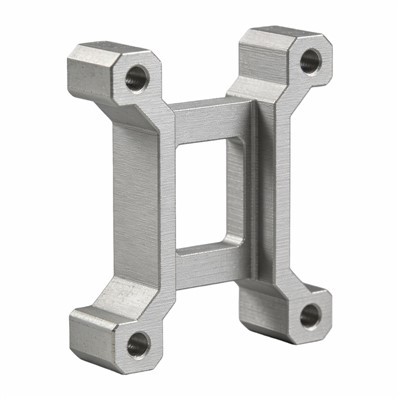
Our state – of – the – art 3D printers and post – processing equipment allow us to produce high – quality parts with excellent fatigue performance. We pay close attention to every detail, from the printing orientation to the post – curing process, to ensure that your parts meet your specifications.
Sheet Metal Cutting If you’re in need of SLA or SLS 3D printed parts with good fatigue resistance, don’t hesitate to reach out. We’re here to discuss your project, answer any questions you might have, and provide you with a quote. Whether you’re a small startup or a large corporation, we’re ready to work with you to bring your ideas to life.
References
- Gibson, I., Rosen, D. W., & Stucker, B. (2010). Additive Manufacturing Technologies: Rapid Prototyping to Direct Digital Manufacturing. Springer Science & Business Media.
- Wohlers, T., & Gornet, P. (2017). Wohlers Report 2017: 3D Printing and Additive Manufacturing State of the Industry. Wohlers Associates.
Shenzhen Jingcheng Dingyi Forming Technology Co., Ltd.
Shenzhen Jingcheng Dingyi Forming Technology Co., Ltd. is one of the most professional sla/sls 3d printing parts manufacturers and suppliers in China, also supports customized service with low price. Please feel free to buy bulk cheap sla/sls 3d printing parts from our factory. For quotation, contact us now.
Address: 1st Floor, Building 3, Huafeng Zhenbao Industrial Park, No.137 Shihuan Road, ShiYan Town, Bao’An District, ShenZhen, PRC
E-mail: 13071475061@163.com
WebSite: https://www.jctop-cnc.com/
