In the industry of forged parts, understanding the differences between open-die forging and closed-die forging is crucial for both manufacturers and customers. As a seasoned supplier of forged parts, I’ve witnessed firsthand how these two forging methods can significantly impact the quality, cost, and lead time of the final products. In this blog, I’ll delve into the details of open-die forging and closed-die forging, highlighting their unique characteristics, advantages, and disadvantages. Forged Parts
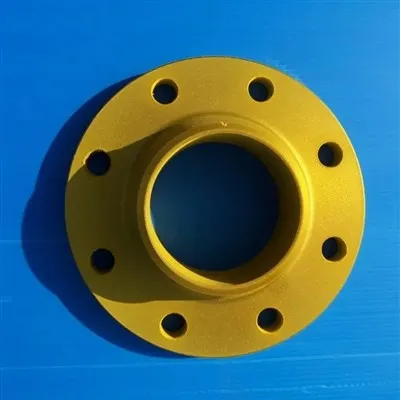
Open-Die Forging
Open-die forging, also known as free forging, is one of the oldest and most basic forging processes. In open-die forging, the workpiece is placed between two flat or simple-shaped dies, and pressure is applied to deform the metal. The dies do not completely enclose the workpiece, allowing the metal to flow freely in multiple directions. This method is suitable for producing large, simple-shaped parts with relatively low precision requirements.
Characteristics of Open-Die Forging
- Flexibility: Open-die forging offers great flexibility in terms of part size and shape. It can be used to forge parts ranging from small components to extremely large pieces, such as shafts, spindles, and rings. The ability to work with a wide range of sizes makes it a popular choice for custom projects.
- Low Tooling Costs: Since the dies in open-die forging are relatively simple in shape, the tooling costs are generally lower compared to closed-die forging. This makes it a cost-effective option for small production runs or prototype development.
- Improved Material Properties: The repetitive hammering or pressing action in open-die forging helps to refine the grain structure of the metal, resulting in improved mechanical properties such as high strength, toughness, and ductility. These properties make open-die forged parts suitable for applications where reliability and durability are critical.
Advantages of Open-Die Forging
- Suitable for Large Parts: Open-die forging is ideal for producing large and heavy parts that are difficult or impossible to manufacture using other methods. The ability to handle large workpieces makes it a preferred choice for industries such as power generation, mining, and aerospace.
- Customization: With open-die forging, it is possible to create custom-shaped parts according to the specific requirements of the customer. The flexibility of the process allows for the production of unique designs, making it a valuable option for specialized applications.
- Short Lead Time: Due to the simplicity of the tooling and the relatively straightforward process, open-die forging generally has a shorter lead time compared to closed-die forging. This can be beneficial for customers who require quick turnaround times.
Disadvantages of Open-Die Forging
- Low Precision: Open-die forging is not suitable for producing parts with high precision requirements. The free-flowing nature of the metal during forging makes it difficult to control the dimensions and tolerances of the final product. Additional machining operations may be required to achieve the desired accuracy.
- Limited Complexity: The shape complexity of open-die forged parts is limited compared to closed-die forging. The simple dies used in open-die forging restrict the ability to create intricate shapes and features.
- Higher Material Waste: Since the metal flows freely during open-die forging, there is a greater amount of material waste compared to closed-die forging. This can increase the overall cost of production, especially for expensive materials.
Closed-Die Forging
Closed-die forging, also known as impression-die forging, is a more advanced forging process that involves the use of dies with cavities that are shaped to the desired final part. The workpiece is placed in the die cavity, and pressure is applied to force the metal to fill the cavity completely. This method is suitable for producing parts with high precision and complex shapes.
Characteristics of Closed-Die Forging
- High Precision: Closed-die forging offers excellent dimensional accuracy and tight tolerances. The use of precision dies ensures that the final part meets the exact specifications of the design. This makes it a popular choice for applications where precision is critical, such as automotive, aerospace, and medical industries.
- Complex Shapes: Closed-die forging allows for the production of parts with complex shapes and features. The die cavities can be designed to create intricate details, such as holes, slots, and contours, without the need for additional machining operations.
- Good Surface Finish: The closed-die forging process results in a smooth and uniform surface finish on the final part. This eliminates the need for extensive finishing operations, reducing the overall production time and cost.
Advantages of Closed-Die Forging
- High Productivity: Closed-die forging is a highly productive process that can produce a large number of parts in a relatively short period. The use of automated presses and advanced tooling systems allows for high-speed production, making it suitable for mass production applications.
- Material Savings: Compared to open-die forging, closed-die forging generates less material waste. The precise control of the metal flow during forging ensures that the material is used efficiently, reducing the overall cost of production.
- Improved Mechanical Properties: Similar to open-die forging, closed-die forging also enhances the mechanical properties of the metal. The grain flow in the forged part follows the shape of the die cavity, resulting in improved strength and fatigue resistance.
Disadvantages of Closed-Die Forging
- High Tooling Costs: The cost of designing and manufacturing the dies for closed-die forging is relatively high. The dies need to be made with high precision and durability to withstand the high pressures and forces involved in the forging process. This makes closed-die forging less cost-effective for small production runs.
- Long Lead Time: The design and fabrication of the dies for closed-die forging can be a time-consuming process. This can result in a longer lead time compared to open-die forging, especially for custom-designed parts.
- Limited Part Size: Closed-die forging is generally limited to producing parts of a certain size. The size of the die cavity and the capacity of the forging press determine the maximum size of the part that can be produced.
Comparison between Open-Die Forging and Closed-Die Forging
Now that we have a better understanding of the characteristics, advantages, and disadvantages of open-die forging and closed-die forging, let’s compare the two methods in terms of various factors:
Part Size and Shape
- Open-die forging is suitable for producing large and simple-shaped parts, while closed-die forging is better suited for small to medium-sized parts with complex shapes.
- Open-die forging can handle a wider range of part sizes, from small components to extremely large pieces, while closed-die forging is limited by the size of the die cavity and the capacity of the forging press.
Precision and Tolerance
- Closed-die forging offers higher precision and tighter tolerances compared to open-die forging. The use of precision dies ensures that the final part meets the exact specifications of the design.
- Open-die forging is less precise and may require additional machining operations to achieve the desired accuracy.
Cost
- Open-die forging generally has lower tooling costs but may result in higher material waste, making it more cost-effective for small production runs or prototype development.
- Closed-die forging has higher tooling costs but lower material waste, making it more suitable for mass production applications.
Lead Time
- Open-die forging generally has a shorter lead time compared to closed-die forging, especially for simple-shaped parts. The simplicity of the tooling and the relatively straightforward process allow for quicker production.
- Closed-die forging has a longer lead time due to the design and fabrication of the dies. This can be a disadvantage for customers who require quick turnaround times.
Material Properties
- Both open-die forging and closed-die forging enhance the mechanical properties of the metal by refining the grain structure. However, the grain flow in closed-die forging follows the shape of the die cavity, resulting in improved strength and fatigue resistance.
Conclusion
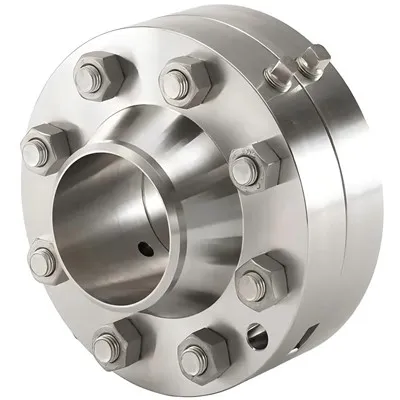
In conclusion, open-die forging and closed-die forging are two distinct forging methods with their own unique characteristics, advantages, and disadvantages. The choice between the two methods depends on various factors, such as part size, shape, precision requirements, cost, and lead time. As a forged parts supplier, I have the expertise and capabilities to provide both open-die forging and closed-die forging services to meet the specific needs of my customers.
Ansi B16.36 Orifice Flange If you’re in the market for high-quality forged parts, I encourage you to contact me to discuss your requirements. Whether you need a small batch of custom-designed parts or a large volume of mass-produced components, I can help you find the most suitable forging method and ensure the delivery of top-notch products. Let’s work together to achieve your forging goals.
References
- Dieter, G. E. (1988). Mechanical Metallurgy. McGraw-Hill, Inc.
- Kalpakjian, S., & Schmid, S. R. (2014). Manufacturing Engineering and Technology (6th ed.). Pearson Education.
- Totten, G. E., & Mackenzie, S. (2003). Handbook of Aluminum: Physical Metallurgy and Processes. CRC Press.
Shanxi Xinshunda Flange Manufacturing Co., Ltd.
As one of the most professional forged parts manufacturers and suppliers in China, we also support customized service with competitive price. We warmly welcome you to wholesale high quality forged parts for sale here from our factory. For quotation, contact us now.
Address: Zhunagli Industrial Zone,jinchang Town,dingxiang,shanxi,china
E-mail: sales01@xinflange.com
WebSite: https://www.xinflange.com/
