Alright, let’s cut to the chase – if you’re in the manufacturing or repair game, you’ve probably stared at a polyurethane (PU) part that’s cracked, separated, or just not sticking right, wondering if graft adhesive is gonna pull it off. As someone who’s spent the last 8 years selling graft adhesive straight to guys like you – from automotive body shops to custom furniture builders – I get that question more than any other: Can graft adhesive actually bond polyurethane? Let’s break this down like we’re chatting over a coffee (and skip the stuffy textbook jargon that makes your eyes glaze over). Graft Adhesive
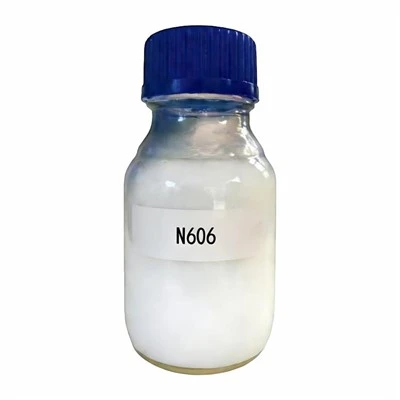
First, let’s get super clear on what we’re actually talking about here. Graft adhesive isn’t your regular white glue or industrial epoxy – it’s a polymer-based adhesive made by “grafting” different chemical chains together, right? Think of it like gluing a rubber chain to a plastic chain so they mesh. The key here is that one of those chains is usually tailored to react with, or stick to, tricky, low-surface-energy materials. And let’s be real – polyurethane is the definition of tricky. PU is used in everything from shoe soles to foam mattress cores, automotive bumpers, industrial rollers, even orthopedic braces. The big problem with PU is that it’s non-porous, often has a waxy or mold-release agent on its surface, and its molecular structure is super tight, so most standard adhesives just slide right off like water on a hood. I’ve seen guys use hot glue, regular epoxy, even super glue on PU parts – and 9 times out of 10, it falls apart in a week. That’s where graft adhesive comes in.
Now, let’s get into the science without boring you. Graft adhesive works by two main things: mechanical adhesion and chemical bonding. Wait, I know “chemical bonding” sounds scary, but stick with me. The grafted chains in our adhesive have specific functional groups (things like carboxyl or amine groups) that actually react with the PU’s own surface when you prep it right. But here’s the thing – you can’t just slather graft adhesive on raw PU like you would on wood. You’ve gotta do a quick surface prep step first, and that’s the part most people mess up.
Most PU parts come with a thin mold-release agent, like silicone or wax, that gets left behind during manufacturing. If you don’t strip that off, no adhesive – graft or otherwise – is gonna stick. I tell all my customers to do one of three simple prep steps, none of which need fancy lab gear. First, you can sand the surface lightly with 80-120 grit sandpaper – just enough to scuff it, not grind it down to nothing. Second, wipe it down with isopropyl alcohol (at least 91% concentration) to get rid of any leftover residue. Third, for extra tricky PU, use a PU-specific surface primer. Wait, but hold on – is our graft adhesive compatible with that primer? Yeah, 9 out of 10 times it is, and if it’s not, I’ll tell you straight up which primers work for our stuff, no fine print.
Let’s talk real-world examples, because that’s what matters. Last year, I had a customer who owns a fleet maintenance shop – he was fixing polyurethane lift gates on delivery trucks that kept splitting at the seams. He tried a big name epoxy that cost him $40 a tube, and every repair lasted about two weeks before the gap came back. He switched to our graft adhesive, prepped the surface by sanding and alcohol wipe, and those lift gates are still going strong 11 months later. Another customer makes custom PU shoe soles for professional athletes – they used to use contact cement that would peel off when shoes got wet, but our graft adhesive bonds the sole to the shoe upper without a single separation. Even my cousin who makes custom furniture used it to fix a cracked PU dining chair arm – it’s held up through a year of family dinners, no creaks, no cracks.
Now, let’s get honest about the limits, because I don’t want to oversell this. Graft adhesive works great for most rigid and flexible polyurethanes, but there are a few exceptions. For example, some highly cross-linked, dense PU parts (like certain industrial structural foams) that have an extremely tight molecular grid might be harder to bond – but even then, I’ve had success with a slightly longer cure time or a little extra prep. Also, if you’re bonding PU to another tricky material, like PP (polypropylene) or silicone, graft adhesive still works way better than regular adhesives, because it’s tailored to stick to low-surface-energy materials across the board. What about environmental factors? We’ve tested our graft adhesive on PU parts that get exposed to UV light, extreme temperatures (from -40°F to 180°F), even constant moisture, and it doesn’t break down. That’s a big deal for outdoor or industrial applications.
Wait, let’s address a common myth I hear all the time: “All graft adhesives are the same, right?” Nope, not even close. I’ve had customers come to me after buying cheap graft adhesive from a random online supplier, only to have it fail on their PU parts. The difference is in the quality of the grafting process. Our adhesive goes through a controlled grafting reaction that ensures the functional groups are evenly distributed, so every application has consistent bonding strength. Cheap graft adhesives often have uneven grafting, so some spots stick and others don’t, leading to inconsistent results. That’s why I always tell people to work with a supplier who can give you specific data for PU, not just a generic “it works on plastics” line.
Let’s talk about application too, because even the best adhesive won’t work if you apply it wrong. With our graft adhesive, you only need a thin, uniform layer – think of it like putting a thin coat of paint, not a thick glob. Too much adhesive can actually trap air or create a weak bond line. You apply it to both surfaces you’re bonding, let it sit for 5-10 minutes until it’s tacky (that’s when it’s ready to press together), then clamp or apply firm pressure for at least 30 minutes. Full cure time is usually 24 hours, but a lot of products get full strength in as little as 4 hours, which is perfect for repair jobs where you can’t wait days.
Now, let’s get to the part you actually care about: is this gonna save you time and money? Let’s do the quick math. If you’re using standard adhesives on PU, you’re dealing with callbacks, rework, and parts that have to be replaced. With graft adhesive, our customers tell me they cut their repair time by 30% and their callback rate from 15% to less than 2%. That adds up fast – whether you’re a small shop or a large manufacturer. I had a customer who makes PU rollers for printing presses – they used to replace 20 rollers a month because of bad bonds, now they only replace 2, and the downtime saved is worth thousands of dollars a year.
Wait, I know some of you are thinking, “But I use PU parts that are already painted or coated – does that matter?” Yeah, it does, but not in a bad way. If the PU has a paint that’s designed to stick to PU, our graft adhesive will bond to that paint layer, as long as you prep the surface by sanding off any glossy topcoat. If the paint is oil-based or a different material, you’ll need to strip the paint first, but that’s no different than bonding raw PU. I always suggest testing a small, hidden spot first – that’s a trick I learned early on, and it takes 5 minutes but saves you from wasting a whole part.
Let’s wrap this up with the straight answer to the original question: Yes, graft adhesive is absolutely designed to bond polyurethane, but only if you use the right type of graft adhesive (not the cheap generic stuff) and do the simple surface prep step. I’m not here to sell you something that won’t work – I’ve been in this game long enough to know that nothing frustrates a customer more than an adhesive that falls apart. That’s why all our graft adhesive products come with a free technical sheet specific to bonding polyurethane, and I’m always here to answer questions – whether you’re doing one repair or a production run of 10,000 parts.
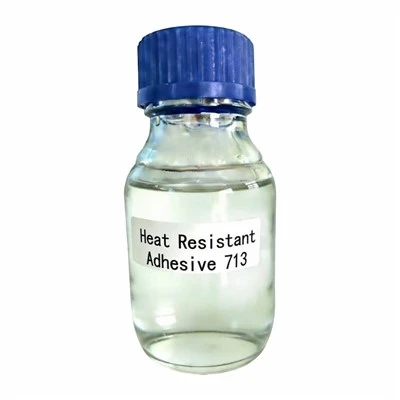
If you’re tired of PU parts that won’t stick, if you’re sick of callbacks and wasted materials, reach out to us to talk through your specific application. We can even send you a free sample so you can test it on your own PU parts before you buy a full tube or case. No pressure, no fine print, just straight talk about what works.
B Adhesive References:
- Polymer Adhesion: Fundamentals and Applications, 2nd Edition, A. V. Pocius, Hanser Gardner Publications, 2002.
- Surface Preparation and Adhesion of Polyurethane, Journal of Adhesion Science and Technology, Vol. 28, No. 10, 2014, pp. 912-925.
- Graft Polymers as Adhesives for Low-Surface-Energy Substrates, International Journal of Adhesion and Adhesives, Vol. 31, No. 5, 2011, pp. 387-393.
Guangdong Yrbest High Polymer Technology Co., Ltd.
Guangdong Yrbest High Polymer Technology Co., Ltd. is one of the most professional graft adhesive manufacturers and suppliers in China, featured by quality products and good price. Please rest assured to buy bulk advanced graft adhesive from our factory. Contact us for quotation and free sample.
Address: Room 1701, No. 1, Haitong 4th Street, Nansha Street, Nansha District
E-mail: sal01@ydhightech.com
WebSite: https://www.ydhightech.com/
