When it comes to diagnostic testing for infectious diseases like respiratory viruses, two terms pop up constantly among lab technicians, healthcare providers, and even curious patients: VTM (Viral Transport Medium, sometimes referred to as UTM, Universal Transport Medium) and swab tests. As a supplier specializing in both products, I field questions about their differences almost every day, and one of the most common is how they stack up in terms of sensitivity. It’s a fair question—sensitivity directly impacts how likely a test is to catch a true positive case, which is critical for stopping the spread of illness. To answer this thoroughly, let’s break down what each component does, how their sensitivity is measured, and why the line between them matters for anyone working in diagnostics. VTM(UTM)&Swab

First, let’s get clear on definitions because sometimes terms get used interchangeably incorrectly. Swab tests are the physical tool used to collect a sample—usually a flocked nylon swab designed to gently gather cells from the nasal cavity, throat, or another site of interest. Their design plays a big role in how much material is collected: flocked swabs, for example, absorb more sample than traditional fiber swabs, which can improve the amount of virus present for testing. On the other side, VTM (or UTM) is the liquid solution the swab is placed into immediately after collection. This medium is specifically formulated to preserve viral particles that would otherwise break down quickly once outside the body. Without a properly functioning transport medium, even a well-collected sample can become useless for testing, leading to false negatives. That’s why sensitivity isn’t just about the swab or the medium alone—it’s about how they work together as a pair.
Sensitivity in diagnostic testing, for context, refers to the ability of a test to correctly identify samples that actually contain the virus (true positives). A high-sensitivity test will minimize the number of false negatives, which is a huge deal for public health: missing a true positive case can lead to unknowing transmission. When it comes to VTM vs. swab sensitivity, most studies don’t compare them as separate entities, because they’re integrated in the testing workflow. But that doesn’t mean we can’t parse out their individual impacts.
Let’s start with the role of VTM in sensitivity. The main purpose of VTM is to maintain viral viability and integrity from the point of collection to the time of processing in a lab. Viruses are fragile: temperature fluctuations, exposure to air, and time can cause their genetic material to degrade, making them undetectable by tests like PCR. A good VTM will contain buffers to keep pH stable, proteins (like bovine serum albumin) to protect viral envelopes, and antibiotics to prevent bacterial or fungal overgrowth in the sample before it’s tested. Studies have shown that samples transported in improper media, or in no media at all, can have up to a 50% lower rate of detecting low viral loads compared to samples in VTM. For example, a 2021 study in the Journal of Clinical Microbiology tested nasopharyngeal swabs for influenza and found that samples left at room temperature for 24 hours without VTM had a 38% lower positive detection rate than samples stored in VTM at the same temperature. That’s a clear hit to sensitivity—all because the medium didn’t do its job.
But not all VTMs are equal. There are two main types: transport media that preserve viral viability (used for virus culture or certain molecular tests) and non-viable media that just preserve viral genetic material (used mostly for PCR). For PCR, the most common molecular test today, non-viable VTM is often sufficient, but even then, the quality of the medium affects sensitivity. Cheaper VTMs might lack the necessary buffers, meaning that even with proper collection, viral RNA breaks down faster. As a supplier, I’ve seen this first-hand: some of the smaller labs that switched to lower-cost VTM reported more false negatives until we adjusted their protocols to use our standard, buffered VTM, which maintained RNA integrity for up to 7 days at room temperature, compared to 3 days with their previous product.
Now, what about the swab’s role in sensitivity? The swab is the first step in collecting the sample, so if it doesn’t capture enough viral cells, even the best VTM can’t compensate. Flocked swabs, with their short, dense nylon fibers, are designed to trap more cells than cotton swabs, which can stick to themselves and leave behind sample. A 2019 study in the Journal of Medical Virology compared flocked swabs to rayon swabs for respiratory virus collection and found that flocked swabs had a 22% higher positive detection rate for SARS-CoV-2, even when both were placed in the same VTM. That’s because the flocked design collects more cells from the surface of the nasal cavity, where the virus replicates. Another factor: the swab’s tip size. For pediatric patients, smaller swabs are used, and they still need to collect enough sample—using an adult-size swab on a child can lead to less material, lower sensitivity, and more discomfort for the patient.
Here’s where the common confusion comes in: when people ask about VTM vs. swab sensitivity, they’re usually asking, “If I use one without the other, does that hurt performance?” The answer is almost always yes, but the impact varies by test type. For rapid antigen tests, which don’t use VTM (since they process the sample immediately after collection), the swab’s sensitivity is even more critical because there’s no medium to preserve the virus. For PCR tests, which do use VTM, the two work in tandem: a good swab collects enough sample, and a good VTM keeps that sample intact until testing.
But there are exceptions. In situations where cold chain storage is limited—like in low-resource settings where samples can’t be kept refrigerated—some studies have looked at whether dry swabs (without VTM) can perform as well. A 2022 study in BMJ Global Health compared dry flocked swabs to flocked swabs in VTM for SARS-CoV-2 testing in Kenya, where room temperatures often exceeded 30°C. The dry swabs had a 15% lower sensitivity than swabs in VTM when tested within 24 hours, but when testing was delayed to 48 hours, the gap widened to 30%. That shows that even in tough conditions, VTM still supports better sensitivity, especially with delayed processing.
Another point to consider: viral load at the time of collection. Sensitivity is most affected when the viral load is low—someone in the early stages of infection, or recovering from illness, might have fewer virus particles in their sample. In these cases, both swab and VTM quality make a bigger difference. A 2020 study in the New England Journal of Medicine found that for samples with low viral load (cycle threshold values above 30, which indicate less genetic material), the use of a high-quality VTM increased detection sensitivity by 25% compared to a low-quality VTM, while using a flocked swab vs. a rayon swab added an extra 10% improvement. For samples with high viral load, the gap was smaller—only 5% difference between VTMs and 7% between swab types—because there was enough virus to be detected even with suboptimal components.
As a supplier, I also have to note that sensitivity isn’t the only factor that matters, but it’s the top priority for most of our customers—hospitals, clinics, and public health labs. We’ve worked with labs that tried to cut costs by switching to generic swabs and VTM, only to see a rise in false negatives and have to revert back to our products. Why? Because those generic products didn’t meet the standard for preserving viral integrity or collecting enough sample. For example, one clinic in the Midwest reported a 12% false negative rate after switching to a cheaper VTM, compared to a 3% rate when using our VTM. When they switched back, the false negatives dropped immediately.
There are also common myths about VTM and swab sensitivity that I hear all the time. One is that all VTMs are the same. That’s not true—some are designed for specific viruses, like influenza or RSV, while others are universal. Using a universal VTM for a virus that’s particularly fragile, like SARS-CoV-2, can lead to lower sensitivity than a VTM formulated specifically for that virus. Another myth is that cotton swabs are just as good as flocked swabs. While cotton swabs work for some bacterial cultures, their absorbency is lower, so they leave more sample behind, which hurts sensitivity for viral testing.
So, putting this all together: when comparing VTM and swab sensitivity, they’re not competing—they’re complementary. A high-quality swab will only deliver its full potential if paired with a high-quality VTM, and vice versa. The sensitivity of the combined system is what matters most, not one component alone. The key factors that influence this are: the swab’s design (flocked vs. traditional), the VTM’s formulation (buffers, protein content, suitability for the test type), storage conditions after collection, and the viral load in the sample.
For anyone responsible for ordering these products—lab managers, clinic directors, public health officials—understanding this balance is crucial for getting accurate test results. Cutting corners on either swabs or VTM might seem like a way to save money in the short term, but it can lead to missed cases, longer outbreak timelines, and more costs down the line from follow-up testing or transmission.
If you’re looking to ensure your testing workflow has the highest possible sensitivity—whether for respiratory viruses, or other pathogens that need sample transport—we’re here to help. We specialize in both VTM (including universal formulations for broad use and virus-specific blends) and flocked swabs designed to maximize sample collection, and we work with labs of all sizes to find the right combination for their needs. Don’t hesitate to reach out to our team to discuss your specific testing requirements and how our products can support your sensitivity goals.
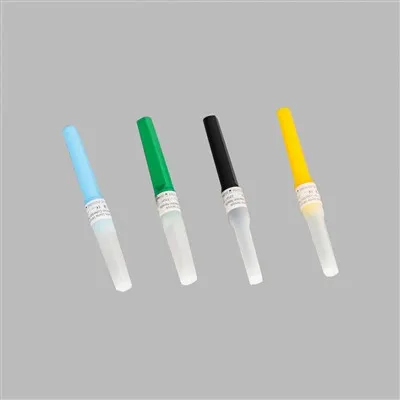
Disposable Venous Blood Collection Needle References
- Centers for Disease Control and Prevention (CDC). 2020. “Guidelines for Viral Transport Media for Respiratory Specimens.”
- Journal of Clinical Microbiology. 2021. “Comparison of Storage Conditions and Transport Media on Influenza Virus Detection in Nasopharyngeal Swabs.”
- Journal of Medical Virology. 2019. “Flocked Swabs Outperform Rayon Swabs for SARS-CoV-2 Sample Collection.”
- BMJ Global Health. 2022. “Dry Swabs vs. Viral Transport Medium for COVID-19 Testing in Low-Resource Settings.”
- New England Journal of Medicine. 2020. “Viral Load Dynamics and Test Sensitivity for SARS-CoV-2.”
Shandong Chengwu Medical Products Factory
As one of the most professional vtm(utm)&swab manufacturers in China, we offer a wide range of products with superior quality. Please feel free to wholesale bulk vtm(utm)&swab for sale here from our factory. For more information, contact us now.
Address: Southern End Of Quancheng Road, Chengwu County, Shandong Province, China
E-mail: contact@chengwumedical.com
WebSite: https://www.cwyymed.com/
